Regular sauna bathing is genuinely associated with a longer life. Research from Finland, where sauna culture runs deep, consistently links frequent sauna use to a meaningfully reduced risk of early death, particularly from cardiovascular causes. The more often people use a sauna, the stronger the protective effect appears to be. Below, we unpack the key questions around sauna bathing and longevity.
How many years can regular sauna use add to your life?
There is no single number of years that sauna use guarantees, but population studies from Finland suggest that people who use a sauna four to seven times per week have significantly lower all-cause mortality rates than those who sauna once a week. The effect is substantial enough that researchers describe frequent sauna use as a meaningful independent factor in longevity, comparable in scale to moderate physical exercise.
The Finnish Kuopio Ischaemic Heart Disease Risk Factor Study, one of the most cited bodies of research on this topic, followed thousands of middle-aged men over decades. It found that those bathing in a sauna most frequently had notably lower rates of fatal cardiovascular events and overall death compared to infrequent users. While the research cannot establish direct causation in isolation, the consistency of the findings across different follow-up periods is compelling. Longevity researchers increasingly treat regular sauna bathing as a genuine lifestyle factor worth taking seriously, not simply a cultural habit.
Why does sauna bathing reduce cardiovascular mortality?
Sauna bathing reduces cardiovascular mortality primarily because the heat stress it creates mimics many of the physiological effects of aerobic exercise. During a sauna session, heart rate increases, blood vessels dilate, and cardiac output rises. This repeated cardiovascular workout strengthens the heart and improves vascular function over time, reducing the risk of hypertension, arterial stiffness, and heart failure.
Beyond the exercise-like response, sauna heat also triggers the release of heat shock proteins, which help repair damaged cells and reduce inflammation. Chronic low-grade inflammation is a well-established driver of cardiovascular disease, so anything that consistently lowers it has real protective value. Sauna bathing also appears to improve endothelial function, meaning the cells lining blood vessels work more efficiently. Collectively, these mechanisms explain why the cardiovascular benefits of sauna use are not simply a correlation with healthy lifestyle habits but appear to be a direct physiological effect of heat exposure.
Does sauna frequency or session length matter more for longevity?
Frequency appears to matter more than session length when it comes to sauna bathing and longevity. The strongest protective associations in research are seen with sauna use four or more times per week. Session length matters too, with sessions of at least fifteen to twenty minutes showing better outcomes than very brief visits, but going longer does not appear to multiply the benefit proportionally.
Think of it similarly to physical activity: consistency over time produces better health outcomes than occasional intense sessions. A person who spends twenty minutes in the sauna four times a week is likely to gain more long-term benefit than someone who does a single ninety-minute session once a week. The body adapts to repeated heat stress, and it is that repeated adaptation that drives the cardiovascular and anti-inflammatory benefits linked to longer life. If you are building a sauna routine with longevity in mind, prioritising regular visits is the more effective strategy.
What other diseases does regular sauna use help prevent?
Beyond cardiovascular disease, regular sauna use is associated with a reduced risk of several other serious conditions. Research points to lower rates of respiratory diseases, certain neurodegenerative conditions including dementia and Alzheimer’s disease, and a reduced incidence of chronic pain conditions such as rheumatoid arthritis.
The respiratory benefits are thought to come from the warm, humid air clearing airways and reducing the burden on the lungs over time. The connection to dementia is particularly striking: studies suggest frequent sauna users have meaningfully lower rates of dementia diagnosis, possibly because of improved cerebrovascular health and reduced systemic inflammation. Sauna bathing also promotes the release of endorphins and reduces cortisol levels, which supports mental health and may reduce the long-term damage that chronic stress causes to the body. While sauna use is not a treatment for any of these conditions, its broad anti-inflammatory and circulatory effects create a protective environment across multiple body systems.
Who should avoid sauna bathing despite its longevity benefits?
Despite its well-documented health benefits, sauna bathing is not appropriate for everyone. People with unstable cardiovascular conditions, such as a recent heart attack, severe aortic stenosis, or uncontrolled heart failure, should avoid sauna use or consult a cardiologist before starting. Pregnant women are generally advised to be cautious, particularly in the first trimester, due to the risk of overheating.
Those who have consumed alcohol should not use a sauna, as alcohol impairs the body’s ability to regulate temperature and significantly increases the risk of dangerous overheating or sudden drops in blood pressure. People with certain skin conditions, active infections, or who are taking medications that affect heat tolerance should also seek medical advice first. For healthy adults, sauna bathing carries very low risk when basic precautions are followed, such as staying hydrated, limiting sessions to a sensible duration, and cooling down gradually. The longevity benefits are real, but they apply to people who can tolerate heat stress safely. If you have questions about finding the right sauna setup for your needs, feel free to contact us for personalised guidance.
What type of sauna delivers the strongest longevity effects?
The Finnish traditional sauna, using dry heat with steam produced by throwing water over hot stones, is the type most consistently studied in longevity research. The majority of the large-scale population studies linking sauna use to reduced mortality were conducted in Finland using this style of sauna, typically at temperatures between 80 and 100 degrees Celsius.
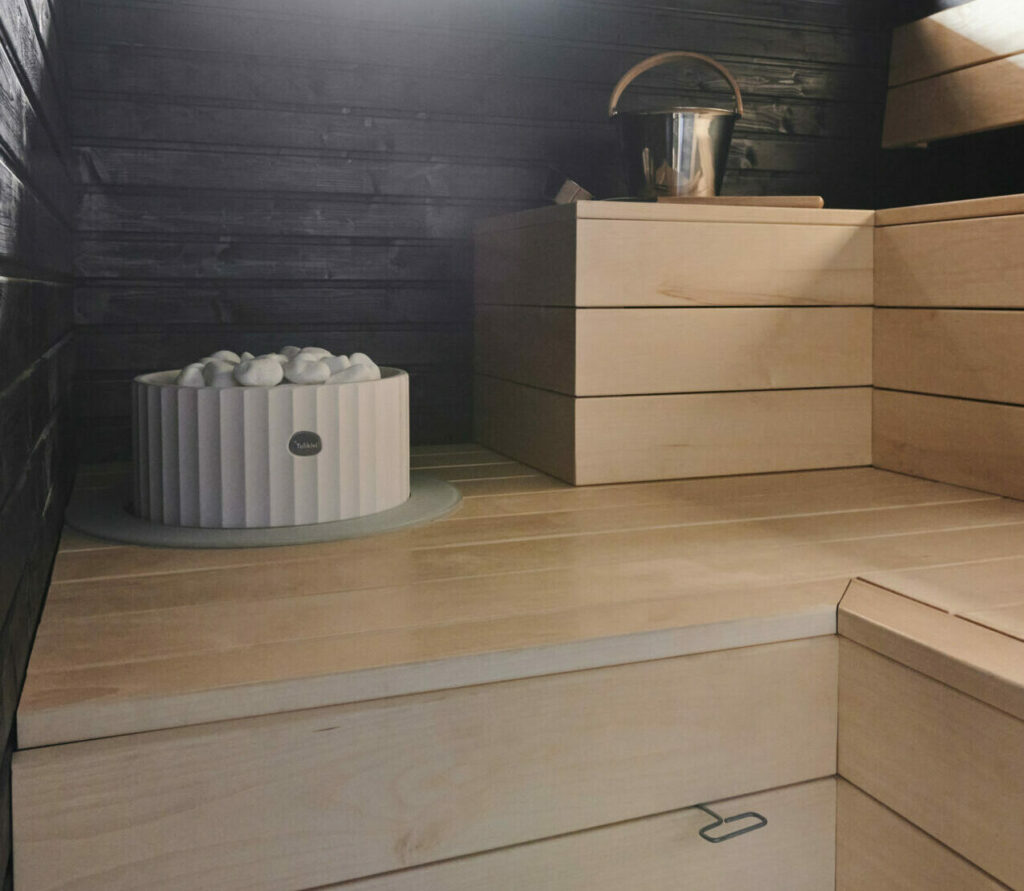
Infrared saunas operate at lower temperatures and heat the body differently, and while early research suggests they may offer some cardiovascular benefits, the evidence base is not as extensive as for a traditional Finnish sauna. Steam rooms provide a different environment again, with high humidity and lower air temperature. Based on current research, the traditional Finnish sauna has the strongest evidence behind its longevity effects. The quality of the sauna environment matters too: a well-built sauna with good heat retention, proper ventilation, and high-quality heat treated sauna wood creates a more consistent and comfortable experience, which in turn supports the regular use that drives long-term health outcomes. At Pieksäwood, we craft sauna benches from premium Finnish aspen and black alder precisely because the right materials make the sauna experience one you want to return to again and again. You can explore our full range of Finnish wood products for saunas to find the right fit for your space.