The carbon footprint of a sauna depends primarily on the materials used to build it. Wood, particularly locally sourced and responsibly harvested timber, is one of the lowest-carbon building materials available, because trees absorb and store carbon dioxide throughout their growth. The type of wood, how it is processed, and how long the finished sauna lasts all shape the final environmental impact. The questions below unpack each of these factors in detail.
Which sauna materials have the lowest carbon footprint?
Naturally grown wood has the lowest carbon footprint of any common sauna material. Timber stores carbon absorbed during the tree’s lifetime, and when it is processed with relatively little energy, the overall emissions from production remain low. Among wood species, fast-growing, locally sourced varieties such as aspen and black alder tend to perform best, because short transport distances and responsible forest management keep the supply chain lean.
Aspen is a particularly strong choice for a sustainable sauna. It grows abundantly in Finland, requires no chemical treatments to be suitable for sauna use, and produces no resin, which means it stays safe and comfortable even at high temperatures. Black alder shares many of the same qualities. Both species are knot-free and smooth, making them ideal for benches and panelling without the need for additional processing that would add to the carbon footprint.
Synthetic materials, including certain plastics and composite products, generally carry a higher carbon cost in production, though composite decking made from recycled materials is an exception worth noting. Stone and tile have relatively high embodied carbon due to quarrying and kiln firing, so they are best used selectively rather than as the dominant material.
How does thermal modification affect wood’s environmental impact?
Thermal modification improves wood’s durability and moisture resistance using only heat and steam, without any chemical additives. Because no biocides or preservatives are involved, thermally modified wood has a very low environmental impact and is safe to use in enclosed spaces like saunas. The energy used in the modification process is the main additional carbon cost compared to unmodified timber.
The trade-off is worthwhile from a lifecycle perspective. Thermally modified wood lasts significantly longer than untreated wood in demanding conditions, which means the sauna needs less frequent renovation or replacement. A longer-lasting structure spreads its embodied carbon over more years of use, reducing the effective annual emissions associated with the material.
We have over 20 years of experience in thermal modification, particularly with aspen and black alder, and we carry out the entire process at our facility in Pieksämäki, Finland. This means the wood is sourced, modified, and finished in one location, keeping transport-related emissions to a minimum.
Does where the wood is sourced affect the sauna’s carbon footprint?
Yes, the origin of the wood has a meaningful effect on a sauna’s carbon footprint. Timber transported over long distances by ship or truck generates significant transport emissions, which can offset some of the environmental advantages of using wood in the first place. Choosing locally or regionally sourced timber reduces these logistics-related emissions considerably.
Forest management practices matter just as much as geography. Responsibly managed forests, where harvesting is balanced by replanting and natural regeneration, maintain the carbon cycle that makes wood a renewable resource. Certification schemes such as PEFC and FSC provide a reliable signal that the timber has been harvested in a way that protects long-term forest carbon stocks.
Finnish aspen is a strong example of low-impact sourcing. Finland has well-regulated forestry, short domestic supply chains, and aspen grows naturally and abundantly without the need for intensive cultivation. When the timber is also processed domestically, as we do in Pieksämäki, the entire production chain stays within a tight geographic footprint.
What is the carbon footprint difference between wood and composite sauna materials?
Solid wood generally has a lower carbon footprint in production than most composite materials, because timber requires less industrial processing and stores carbon rather than releasing it. However, composites made from a high proportion of recycled materials can close this gap significantly, and in some use cases they outperform wood on durability with almost no maintenance required.
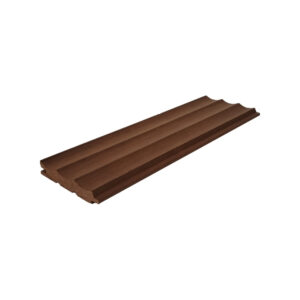
The comparison depends on what part of the sauna you are looking at. For interior surfaces, benches, and panelling, solid wood is the clear low-carbon choice. For outdoor elements such as terraces or sauna decking, a composite made from recycled wood fibre and recycled plastic can be a compelling option. It requires no staining, no sealing, and no periodic replacement, which reduces both the material consumption and the chemical inputs over the product’s lifetime.
We offer composite decking boards made from 60 percent recycled wood fibre and 35 percent recycled plastic. The raw materials are completely non-toxic, and the product has been sold in Finland for over a decade. For outdoor sauna environments, this kind of recycled composite can represent a responsible and durable alternative to virgin timber.
How long a sauna lasts and why it matters for emissions
The lifespan of a sauna is one of the most important but least discussed factors in its total carbon footprint. A sauna that lasts 40 years has a much lower annual carbon cost than one that requires full renovation after 15 years, even if both were built from identical materials. Durability directly determines how efficiently the embodied carbon of the original materials is used.
This is why material quality matters beyond aesthetics. High-quality, correctly dried, and properly finished wood resists warping, cracking, and moisture damage far better than lower-grade alternatives. Thermally modified wood extends this advantage further, particularly in the humid and thermally demanding environment of a sauna interior.
Choosing materials that age well also reduces the need for chemical maintenance products, which carry their own environmental costs. Aspen and black alder naturally resist the heat and moisture of sauna conditions without needing surface treatments, which keeps ongoing maintenance emissions low across the full life of the structure.
What should you look for when choosing a low-carbon sauna?
When choosing a low-carbon sauna, prioritise locally sourced, responsibly certified wood species that require minimal processing and no chemical treatments. Look for timber that is naturally suited to sauna conditions, such as aspen or black alder, so that the structure performs well without synthetic additives. Verify that the supplier controls the production chain from raw material to finished product, as this reduces transport emissions and makes quality claims easier to verify. To discuss your specific requirements, feel free to get in touch with our team.
- Wood species: Choose resin-free, knot-free species like aspen or black alder that perform naturally in heat and humidity
- Thermal modification: Consider thermally modified wood for improved durability without chemical preservatives
- Origin and certification: Prioritise domestically sourced timber from responsibly managed forests with recognised certification
- Production chain: Favour suppliers who handle sawing, modification, and finishing in one location to minimise transport
- Durability: Invest in quality materials that will last decades rather than requiring early replacement
- Outdoor elements: For decking and exterior surfaces, consider recycled composite materials that need no chemical maintenance
A low-carbon sauna is not simply about picking the right species from a list. It is about choosing materials whose entire journey, from forest to finished product, has been managed with care. When the sourcing is local, the processing is clean, and the product is built to last, the environmental impact of enjoying a sauna can be genuinely small.