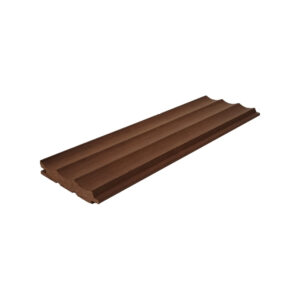
You’ve probably wondered why some wood materials perform better in high-moisture environments than others. The answer often lies in a specialised process called heat treatment, particularly when it comes to aspen wood. Lämpökäsitelty haapa (heat-treated aspen) undergoes remarkable changes that fundamentally alter its relationship with moisture, making it an excellent choice for saunas and other humid spaces.
Understanding why heat-treated aspen resists moisture absorption helps you make informed decisions about wood selection for your projects. This transformation isn’t just surface-deep – it involves complete cellular restructuring that changes the wood’s natural properties. Let’s explore how this process works and why it matters for your applications.
What happens during the heat treatment process
Heat treatment transforms aspen through a carefully controlled thermal modification process that permanently changes the wood’s structure. The process begins by rapidly heating the timber to 100 degrees Celsius to remove all moisture content completely. Once the wood reaches this dry state, temperatures gradually increase to between 175 and 210 degrees Celsius, where the wood remains for 1.5 to 3 days, depending on the species, thickness, and desired colour intensity.
During this extended heating phase, steam and hot air create the controlled environment needed for transformation. The steam serves multiple purposes: it prevents cracking and combustion while influencing the chemical changes occurring within the wood fibres. This combination of high temperature, controlled atmosphere, and extended duration breaks down the wood’s natural moisture-absorbing components.
The treatment concludes by gradually returning the wood to normal temperature, revealing the characteristic rich brown colour and pleasant aroma that define quality heat-treated aspen. This entire process uses only heat and steam, making it completely non-toxic and environmentally friendly, without any chemical additives.
How heat treatment changes aspen’s cellular structure
The molecular transformation during heat treatment fundamentally alters aspen’s cellular composition. High temperatures break down hemicellulose, one of wood’s primary moisture-absorbing components. This breakdown reduces the number of hydroxyl groups within the wood structure, which are the primary sites where water molecules attach.
Simultaneously, the lignin content undergoes chemical modifications that make it less hydrophilic. The cell walls become more crystalline and less porous, creating fewer pathways for moisture penetration. These changes occur at the molecular level throughout the entire thickness of the wood, not just on the surface.
The removal of extractives, resins, and other water-soluble compounds during treatment further reduces the wood’s affinity for moisture. This cellular restructuring creates a more stable material that maintains its dimensions better when exposed to varying humidity levels. The modified cell structure also becomes more resistant to fungal attack, as the reduced moisture content creates an inhospitable environment for decay organisms.
Why untreated aspen absorbs moisture differently
Natural aspen wood contains abundant hemicellulose and cellulose fibres that readily attract and hold water molecules. These hygroscopic materials act like sponges, absorbing moisture from the surrounding air until they reach equilibrium with the environment. In high-humidity conditions, untreated aspen can absorb significant amounts of water, leading to dimensional changes, warping, and potential decay issues.
The cell structure of raw aspen features numerous pores and channels that provide pathways for moisture movement. These natural characteristics make untreated aspen responsive to seasonal humidity changes, causing expansion and contraction cycles that can affect structural integrity over time.
Heat treatment dramatically reduces this moisture absorption capacity by eliminating many of the hygroscopic components and modifying the remaining cellular structure. While untreated aspen might absorb 15–20% of its weight in moisture under high-humidity conditions, heat-treated aspen typically absorbs significantly less, maintaining better dimensional stability.
Real-world benefits of moisture-resistant aspen
The reduced moisture absorption of lämpökäsitelty haapa delivers practical advantages in demanding environments. In saunas, where temperatures and humidity levels fluctuate dramatically, heat-treated aspen maintains its shape and surface quality better than untreated alternatives. The wood stays comfortable to the touch even in high-heat conditions and resists the warping that can occur with moisture-sensitive materials.
For interior panelling and cladding applications, moisture-resistant aspen provides long-term dimensional stability. This stability reduces maintenance requirements and extends the lifespan of installations, particularly in bathrooms, kitchens, and other areas with elevated humidity levels.
The improved durability against moisture also means better resistance to biological degradation. With less available moisture to support fungal growth, heat-treated aspen maintains its structural integrity longer in challenging conditions. This enhanced performance makes it particularly valuable for applications where replacement would be costly or difficult.
Professional builders and designers appreciate how heat-treated aspen’s consistent performance characteristics simplify project planning and reduce callbacks related to moisture-related issues. The material’s stability allows for tighter tolerances in construction and more predictable long-term performance.
Understanding these moisture-resistance properties helps you select the right materials for your specific applications. Whether you’re planning sauna construction, interior renovations, or commercial installations, the science behind heat-treated aspen’s performance provides confidence in material selection. At Pieksäwood, we’ve refined our heat treatment process over 20 years of experience, ensuring our lämpökäsitelty haapa delivers the consistent quality and performance characteristics that modern construction demands. For expert guidance on selecting the right heat-treated wood products for your project, contact us for professional consultation.