Yes, sauna wood colour directly affects how bright and spacious a sauna feels. Light-coloured woods such as aspen reflect more light and make a sauna feel open and airy, while darker woods absorb light and create a more enclosed, intimate atmosphere. The right choice depends on the size of your sauna, your preferred ambience, and how you plan to light the space.
Does sauna wood colour actually change how bright a sauna feels?
Sauna wood colour has a significant impact on perceived brightness. Light sauna wood reflects ambient light back into the space, making the room feel larger and more luminous even with modest lighting. Dark sauna wood absorbs light, which reduces reflection and creates a dimmer, more cocoon-like environment. The difference is most noticeable in smaller saunas where wall surface area is proportionally large.
This is not simply a matter of aesthetics. The reflectance of your wall panelling determines how much of your light source actually illuminates the room versus being absorbed by the wood. A sauna lined with pale aspen can feel bright and welcoming with a single low-wattage light source, while the same fixture in a sauna clad with dark thermally treated wood may leave corners noticeably shadowed. Understanding this relationship helps you make informed decisions about both your panelling choice and your lighting plan.
What are the differences between light and dark sauna wood species?
The most common light sauna wood is aspen (haapa in Finnish), which has a pale, almost white tone with a smooth, knot-free grain. Dark sauna wood options include black alder (tervaleppä) and thermally treated wood, which ranges from warm amber to deep chocolate brown depending on the treatment intensity and species. Each has distinct visual, tactile, and performance characteristics beyond colour alone.
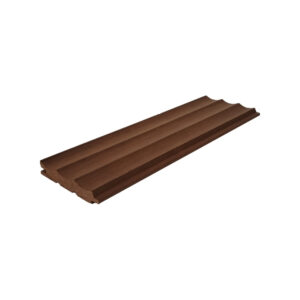
Aspen is prized for its clean, neutral appearance and its exceptionally smooth surface that stays cool to the touch even at high temperatures. It does not contain resins or knots, making it comfortable against bare skin and safe in the heat. Black alder offers a richer, warmer tone and is equally resin-free and knot-free, with a slightly denser grain that gives it more substantial visual weight. Thermally treated wood, whether aspen, black alder, or radiata pine, takes on deeper, richer tones through a heat treatment process that also improves moisture resistance and dimensional stability. We offer all three species in both treated and untreated forms as part of our wood products for sauna interiors, giving you full control over the tone and performance of your sauna panelling.
How should sauna lighting be adjusted for dark wood panelling?
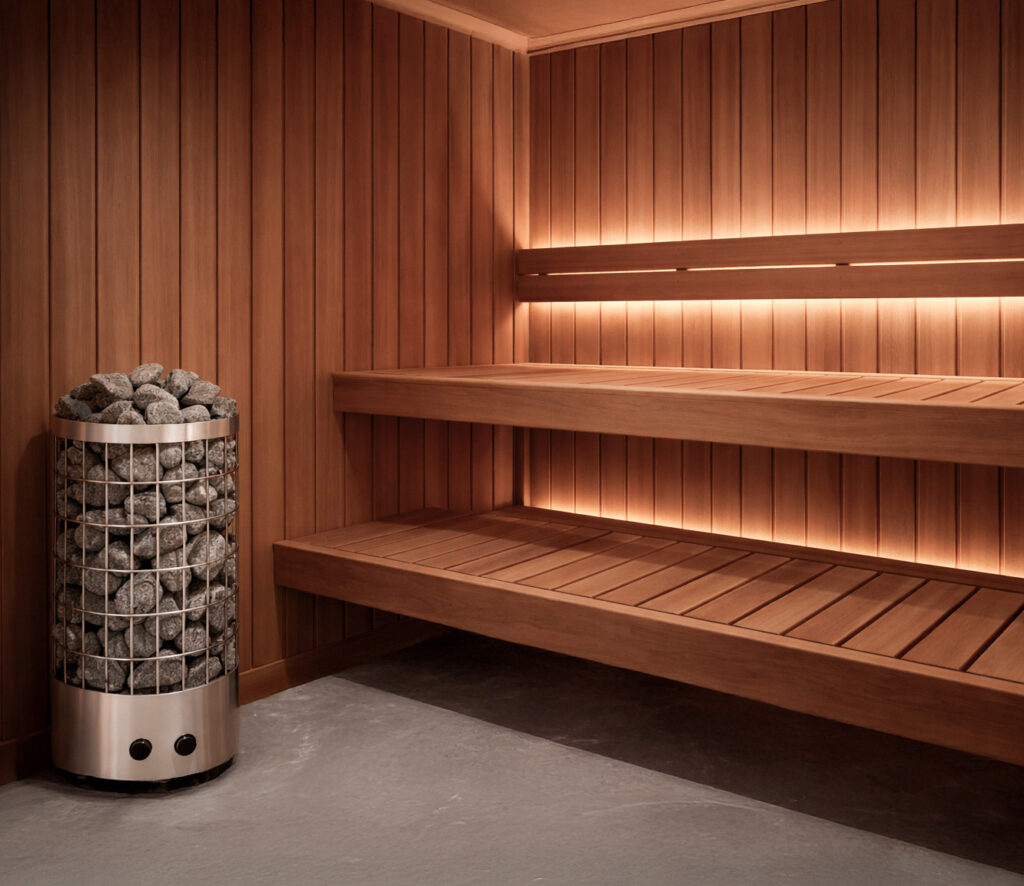
When using dark sauna wood panelling, lighting needs to work harder to compensate for the lower reflectance of the surface. Position light sources closer to eye level or along the bench area rather than relying solely on ceiling fixtures, as this creates warm pools of light that feel intentional rather than dim. Use multiple light points distributed around the sauna rather than a single central source.
Warm-toned LED lighting suits dark wood well because it complements the amber and brown hues of thermally treated wood rather than fighting them. Cool white light tends to look harsh against dark panelling and can make the space feel clinical. Recessed fixtures behind the upper bench or along the floor level are particularly effective because they add depth and drama without over-illuminating the space. The goal with dark wood is not to replicate the brightness of a light-wood sauna but to use lighting to enhance the rich, atmospheric quality that dark panelling naturally offers.
What lighting works best with light-coloured aspen panels?
Light-coloured aspen panels work well with almost any lighting approach because the pale surface reflects and distributes light evenly throughout the sauna. A single well-placed fixture is often sufficient to achieve good overall brightness. Warm white lighting enhances the natural honey tones of aspen, while cooler lighting emphasises its clean, Nordic character.
Because aspen reflects light so efficiently, you have more flexibility in fixture placement. Ceiling-mounted fixtures work well without creating harsh contrasts, and indirect lighting behind benches or panels creates a gentle glow that feels soft rather than stark. If you want a minimalist sauna interior, aspen panelling is forgiving of simple lighting setups. For a more designed look, layered lighting with one ambient source and one or two accent points adds depth without overwhelming the natural lightness of the wood. The pale tone of aspen also makes it easier to see the natural grain and texture of the wood, which adds visual interest even in a simply lit space.
Should you choose light or dark sauna wood for a small sauna?
For a small sauna, light sauna wood is generally the better choice because it reflects light and creates the impression of more space. Light-coloured aspen panels on the walls and ceiling prevent the room from feeling closed in, which is a real risk in compact saunas where dark surfaces can make the space feel heavy and confined.
That said, dark wood in a small sauna is not impossible. If you prefer the moody, intimate atmosphere that dark panelling creates, you can balance it by keeping the ceiling light-coloured and using dark wood only on the lower walls or bench area. This approach draws the eye downward and gives the room a grounded, layered feel without making the ceiling press down visually. The key is contrast: using both tones strategically rather than covering every surface in dark wood. In a larger sauna, this constraint matters less, and you have more freedom to commit fully to a dark interior without sacrificing the sense of space.
How does thermally treated wood affect sauna ambience compared to untreated wood?
Thermally treated wood creates a noticeably warmer, richer sauna ambience compared to untreated wood. The heat treatment process darkens the wood significantly, turning pale aspen into a warm caramel tone and giving black alder or radiata pine a deep, almost espresso-like colour. This colour shift changes the entire mood of the sauna, moving it from fresh and Nordic to warm and enveloping.
Beyond aesthetics, thermally treated wood also performs differently in the sauna environment. The treatment reduces the wood’s ability to absorb moisture, which means it expands and contracts less with humidity changes. This improved dimensional stability makes it a practical choice as well as a visual one. The surface of thermally treated wood also tends to age more gracefully, maintaining its rich tone over time with minimal maintenance.
Untreated aspen and black alder have their own appeal: they start lighter and develop a gentle patina over years of use. If you want a sauna that feels bright and timeless from day one, untreated aspen panelling is hard to beat. If you want depth, warmth, and a more dramatic interior from the start, thermally treated wood delivers that immediately. We offer both options across our Lumo sauna panelling collection, so the choice comes down entirely to the atmosphere you want to create. If you need help deciding which option suits your sauna best, feel free to contact us for expert guidance.