Thermally modified wood is one of the most sustainable choices for sauna design because it extends the natural lifespan of wood dramatically without relying on any chemical additives or preservatives. The modification process uses only heat and steam, making it a genuinely eco-friendly sauna material that performs better and lasts longer than untreated alternatives. The questions below unpack exactly why that matters and how to make the most of thermally treated wood in your sauna.
What makes thermally modified wood more sustainable than regular sauna wood?
Thermally modified wood is more sustainable than regular sauna wood because it lasts significantly longer in high-heat, high-humidity environments, which means less frequent replacement and less raw material consumed over time. The modification process uses no chemicals, only heat and steam, so there is no toxic runoff and no risk of harmful compounds being released in a heated sauna environment.
Sustainability in building materials is rarely just about what goes into a product at the start. It is also about how long that product performs before it needs to be replaced. Regular untreated wood in a sauna environment is exposed to repeated cycles of intense heat and moisture, which accelerates warping, cracking, and biological decay. Thermally treated wood resists all three of these failure modes far more effectively, which stretches the useful life of the material considerably.
When the source timber is also responsibly harvested, as is the case with the Finnish aspen and black alder we use at Pieksäwood, the sustainability case becomes even stronger. Locally sourced, domestically processed, and chemical-free, thermally modified sauna wood from Finland represents a genuinely low-impact material choice from forest to finished product.
How does thermal modification actually change the wood?
Thermal modification changes the chemical structure of wood by breaking down the hemicellulose compounds that normally attract and retain moisture. This is achieved by heating the wood to temperatures typically between 160 and 230 degrees Celsius in a steam environment, which permanently alters the wood at a cellular level without adding any external substances.
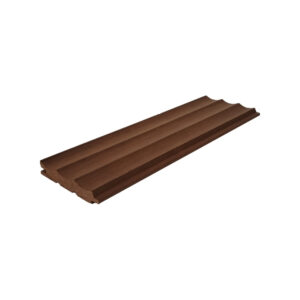
The practical results of this structural change are significant. The wood becomes much more dimensionally stable, meaning it expands and contracts far less when humidity levels shift. It also becomes far more resistant to rot and fungal decay because the sugars and starches that microorganisms feed on are largely eliminated during the process. The wood darkens in color, taking on a warm, rich tone that many people find aesthetically appealing in sauna interiors.
Importantly, the modification also reduces the wood’s thermal conductivity slightly, which means the surface of heat-treated wood benches and panels feels more comfortable to the touch at sauna temperatures. This is a meaningful advantage in a sauna context where skin contact with hot surfaces is a real concern.
Which wood species work best for thermally modified sauna products?
Finnish aspen and black alder are the best wood species for thermally modified sauna products. Both are naturally knot-free and resin-free, which makes them safe and comfortable for skin contact even at high temperatures. When thermally treated, both species gain enhanced stability and durability while retaining their smooth, pleasant surface texture.
Aspen is particularly well suited to sauna use because it is naturally low in resin, does not splinter easily, and has a fine, even grain that responds very well to thermal modification. Black alder shares many of these qualities and also brings a distinctive warm tone to sauna interiors. We have worked with both species for over 20 years and process them through our own sawmill and thermal modification facility in Pieksämäki, Finland, which gives us direct control over quality at every stage.
Thermally modified radiata pine is another option worth considering, particularly for those who want a slightly different aesthetic or are working within a specific budget. It performs well in sauna conditions and offers a good balance of durability and visual character. Each species brings something slightly different to a sauna design, so the best choice depends on the look, feel, and performance requirements of the specific project. You can explore our full range of thermally modified and natural wood products to find the right fit for your project.
What’s the difference between thermally modified and chemically treated wood for saunas?
The key difference is that thermally modified wood uses only heat and steam to improve durability, while chemically treated wood relies on preservative compounds such as copper-based treatments or other biocides. In a sauna, where temperatures are high and ventilation is limited, chemically treated wood poses a genuine health risk because heat can cause those compounds to off-gas into the air you breathe.
Thermally modified wood carries none of that risk. The process is entirely physical, and the finished product contains no added chemicals. This makes it safe for enclosed, heated spaces like saunas, where air quality is a direct health consideration for every person using the space.
From a performance standpoint, both approaches improve the wood’s resistance to moisture and decay, but they do so through fundamentally different mechanisms. Chemical treatment works by making the wood toxic to organisms that cause decay. Thermal modification works by removing the food source those organisms depend on. The result in both cases is longer-lasting wood, but only one of those methods is appropriate for a sauna environment where people are sitting in close proximity to the material for extended periods.
How do you use thermally modified wood in sauna interior design?
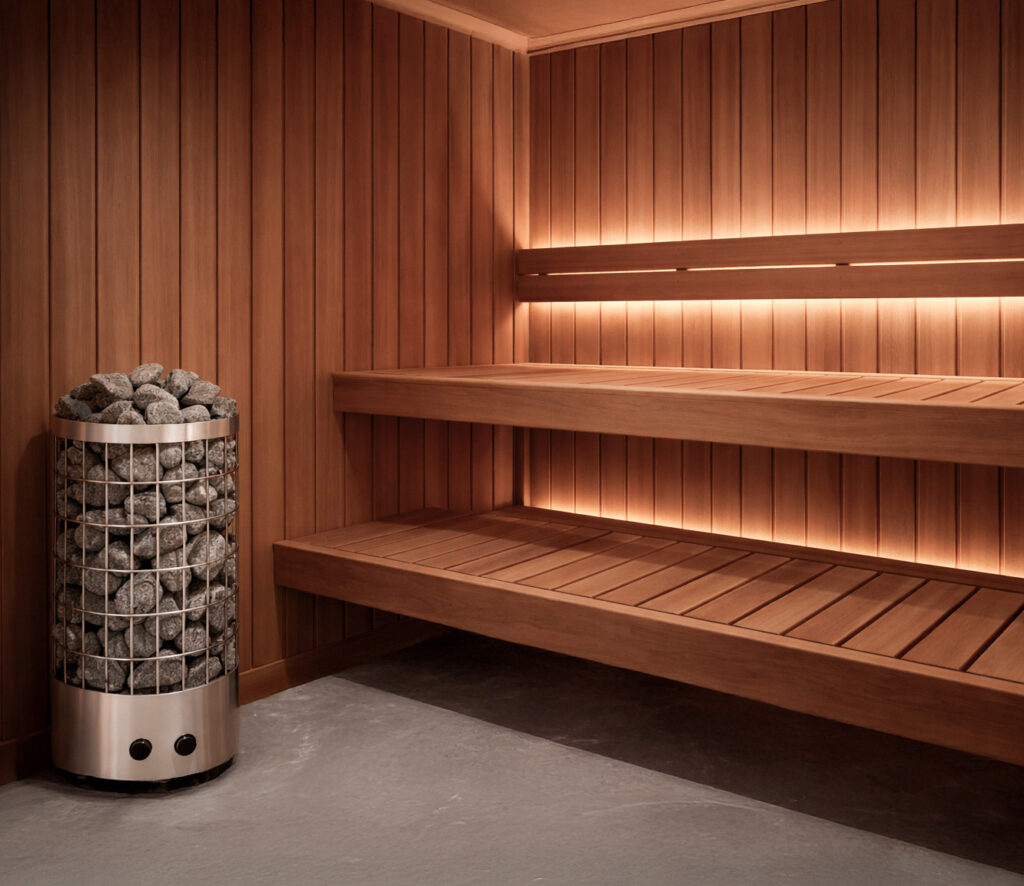
Thermally modified wood works across all the main interior surfaces of a sauna, including bench slats, wall paneling, and ceiling lining. Its rich, darkened tone creates a warm, cohesive aesthetic, and its dimensional stability means it holds its shape and fit even through repeated heating and cooling cycles.
For bench construction, thermally treated aspen or black alder is an excellent choice because the material stays cool enough to the touch to be comfortable while offering the structural integrity needed for load-bearing use. For wall paneling, the warm tones of heat-treated wood create a visually calming environment that complements both traditional and contemporary sauna design approaches.
One of the more interesting design opportunities thermally modified wood offers is contrast. Pairing heat-treated panels, which are darker, with untreated aspen accents, which are lighter, creates a layered visual effect that adds depth to a sauna interior without requiring paint or stain. This kind of natural material pairing is something designers and architects find particularly useful when working on high-end residential or commercial sauna projects. Our range of sauna bench materials and panels is available in both thermally modified and untreated versions to support exactly this kind of design flexibility.
Does thermally modified sauna wood require special maintenance?
Thermally modified sauna wood requires very little maintenance compared to untreated wood. Because the modification process makes the wood more resistant to moisture absorption, warping, and biological decay, it does not need regular oiling, sealing, or chemical treatment to maintain its performance. Routine cleaning is generally sufficient to keep it in good condition.
In a sauna context, the standard approach is to clean bench surfaces with warm water and a soft brush after use, and to allow the sauna to ventilate and dry fully between sessions. This is good practice for any sauna wood, but thermally modified wood is more forgiving if drying time is inconsistent because it absorbs and releases moisture more slowly than untreated wood.
Over time, thermally modified wood may lighten slightly on surfaces exposed to UV light, particularly if the sauna has windows or skylights. If maintaining the original darker tone is important for aesthetic reasons, a light application of a natural sauna-safe oil can slow this process. However, this is a cosmetic consideration rather than a structural one. The durability and stability of the wood are not affected by surface color changes, which means the material continues to perform well regardless of whether any finish is applied. If you have questions about which product is right for your sauna project, get in touch with our team for guidance.