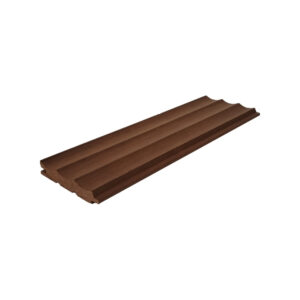
Energy-efficient sauna design means building or upgrading a sauna so it reaches target temperature quickly, retains heat effectively, and uses as little energy as possible without sacrificing comfort. The key factors are insulation quality, heater sizing, wood selection, and ventilation strategy working together as a system. The questions below address each of those factors in practical, actionable detail.
What makes a sauna lose heat the fastest?
A sauna loses heat fastest through poorly insulated walls and ceilings, gaps around the door, and uninsulated floors. Of these, the ceiling is the single biggest culprit because heat rises and escapes directly through any thermal weak point above the bathers. A door that fits loosely or lacks a proper seal can also bleed heat continuously during a session.
Beyond the structure itself, every penetration in the sauna shell, such as ventilation ducts, electrical conduits, and pipe entries, creates a potential cold bridge. Cold bridges are spots where heat bypasses the insulation layer and conducts straight through the building material to the outside. Even a small uninsulated gap can dramatically extend warm-up time and force the heater to work harder throughout the session.
The floor is often underestimated. Concrete or tile floors conduct heat away from the room and from bathers’ feet, which makes the space feel colder than the air temperature actually is. Raising bathers off a hard floor with wooden grating, and insulating beneath any slab, reduces this effect significantly.
How does sauna insulation affect energy consumption?
Sauna insulation directly controls how much energy the heater must produce to maintain temperature. A well-insulated sauna reaches bathing temperature faster, holds it longer, and requires less electricity or fuel per session. In practical terms, upgrading from minimal insulation to a proper vapor barrier and thick mineral wool can cut energy use per session noticeably, depending on the starting condition of the sauna.
The insulation system in a sauna has two distinct jobs. First, it slows thermal transfer through the walls, ceiling, and floor. Second, the vapor barrier on the warm side of the insulation layer protects the insulation material itself from moisture damage. If steam penetrates the insulation, it loses its thermal resistance over time and can cause structural rot, which compounds both the energy problem and the maintenance cost.
For sauna energy efficiency, prioritize ceiling insulation first, then walls, then the floor. The ceiling should have at least 150 mm of mineral wool in a typical Finnish indoor sauna, with a continuous vapor barrier sealed carefully at every joint and penetration.
What is the best wood for an energy-efficient sauna interior?
The best wood for an energy-efficient sauna interior is one that absorbs and releases heat slowly, stays cool to the touch at high temperatures, and does not warp or crack under repeated humidity cycles. Aspen and black alder are the traditional Finnish choices and remain the benchmark for sauna benches and paneling. Both are knot-free, resin-free, and have low thermal conductivity, which means they do not burn bathers even in intense heat.
Wood choice affects energy efficiency indirectly but meaningfully. A dense, resin-heavy wood absorbs more heat from the air, which forces the heater to work harder to maintain temperature. Lightweight, low-density woods like aspen reach thermal equilibrium faster, allowing the room to heat up more quickly and the heater to cycle down sooner.
We produce sauna benches and paneling from high-quality Finnish aspen and black alder, both untreated and thermally modified, precisely because these species perform best in the demanding conditions of a sauna. The smooth, knot-free surface is not just an aesthetic choice; it reflects the practical properties that make these woods ideal for sauna building.
How do you choose the right sauna heater size?
Choose a sauna heater by calculating the volume of the sauna room in cubic meters and matching it to the heater’s kilowatt rating, typically using the rule of 1 kW per cubic meter as a starting point. Adjust upward if the sauna has large glass surfaces, is poorly insulated, or is located in an unheated outbuilding. Undersizing the heater is one of the most common mistakes in sauna building and directly harms energy efficiency.
An undersized heater runs at maximum output continuously, struggles to reach target temperature, and still uses nearly the same electricity as a correctly sized unit would while delivering worse results. An oversized heater, by contrast, reaches temperature quickly and then cycles efficiently, which is generally the more energy-efficient operating pattern.
Stone mass also matters. A heater with more stones stores more thermal energy, which smooths out temperature fluctuations and allows the heating element to rest between cycles. For traditional Finnish löyly, a heater with generous stone capacity is preferable both for the bathing experience and for steady, efficient heat management.
Does sauna ventilation waste energy?
Sauna ventilation does remove some heated air from the room, but it is not a source of energy waste when designed correctly. Proper ventilation is essential for air quality, moisture control, and the comfort of bathers. A sauna without adequate airflow becomes stuffy and humid in a way that feels oppressive rather than pleasant, and excess moisture accelerates structural wear. The goal is controlled ventilation, not the elimination of it.
The standard approach is to place the fresh air inlet low on the wall near the heater, so incoming cool air heats up before it reaches the bathers, and to position the exhaust outlet lower on the opposite wall rather than at ceiling height. This layout avoids pulling the hottest air directly out of the room and instead circulates air at a level where it has already given up some of its heat.
Adjustable vents allow bathers to reduce airflow during the heating phase and open it slightly once the room is at temperature. Closing vents completely during or after bathing traps excess moisture and can cause condensation damage, so some airflow should always be maintained after a session to allow the sauna to dry out properly.
When should you use thermally modified wood in a sauna?
Thermally modified wood is the right choice for sauna applications where exceptional moisture resistance, dimensional stability, and long-term durability are priorities. The thermal modification process, which treats wood with high heat in a controlled environment without chemicals, fundamentally changes the wood’s cell structure so it absorbs and releases moisture far more slowly than untreated wood. This makes it highly resistant to warping, cracking, and biological decay.
In sauna building, thermally modified wood is particularly valuable in exterior saunas, outdoor shower areas, and any sauna that experiences wide swings in temperature and humidity. It is also an excellent choice for sauna paneling in commercial or public facilities where the sauna is used intensively and long service life is a financial priority.
We have over 20 years of experience in thermal modification, working primarily with aspen and black alder, the same species that are already the best performers in untreated form. Thermally modified versions of these woods carry those natural advantages further, offering a surface that remains stable and beautiful through years of demanding use. For a private home sauna used a few times a week, untreated aspen or black alder is often entirely sufficient. For high-traffic or outdoor settings, thermally modified wood is the more reliable long-term investment. Contact us to discuss your sauna project and find the right wood solution for your needs.