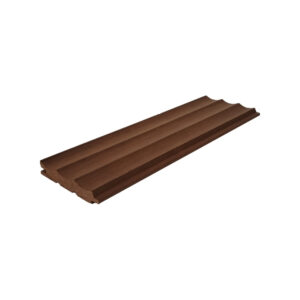
Choosing wood for a commercial sauna involves more than comparing species. Bench comfort, surface quality, appearance, cleaning, supply and the demands of daily use all affect the specification. Both thermo-treated aspen and Red Cedar can be suitable choices. Pieksäwood’s thermo-treated aspen offers a smooth, knot-free and resin-free option for projects seeking a consistent finish and Finnish manufacturing. The right choice depends on the specific products available and the needs of the facility.
How does thermo-treated aspen perform in a commercial sauna?
Thermo-treatment reduces aspen’s moisture absorption and improves its dimensional stability compared with untreated wood. These properties are useful in a sauna, where temperature and humidity change repeatedly. Pieksäwood treats its wood using controlled heat and steam at its facility in Pieksämäki.
That does not establish that thermo-treated aspen will always outlast Red Cedar. The performance of either material depends on the grade and dimensions of the boards, installation, ventilation, cleaning and intensity of use. For a commercial project, assess the finished products and their technical information rather than assuming that one wood species will perform better in every sauna.
What matters most when choosing wood for benches?
Benches are contact surfaces, so the feel and finish of the boards deserve particular attention. Pieksäwood describes its thermo-treated aspen bench boards as smooth, knot-free and resin-free. These are useful qualities for a surface that guests sit or lean against.
Red Cedar bench boards can also be suitable for sauna use. Their appearance and finish vary by product and grade. Ask for samples of the exact boards proposed for your project, and check the surface, edges, knots and consistency across the quantity required. Without comparable measurements, it would be misleading to claim that one material always feels cooler to the touch.
What are the main visual differences?
Red Cedar is known for its reddish tones, visible grain and characteristic aroma. These qualities can be central to a sauna’s design.
Thermo-treated aspen offers a different visual result: a warm brown tone and, in Pieksäwood’s knot-free bench products, a clean and continuous surface. It can suit a design where a restrained appearance matters. Colour varies between products and can look different under the sauna’s lighting, so physical samples are more useful than photographs alone.
Does thermo-treated aspen require less maintenance than Red Cedar?
There is no sound basis for a blanket claim that it does. Heat treatment improves aspen’s dimensional stability compared with untreated aspen, but that does not prove that a commercial sauna fitted with thermo-treated aspen will need less cleaning or fewer repairs than one fitted with Red Cedar.
Both materials need care appropriate to the finished product and level of use. Pieksäwood advises drying wooden surfaces thoroughly after sauna use, providing adequate ventilation and cleaning them with suitable products. A busy commercial facility should plan its cleaning and inspection routine around actual use and the manufacturer’s instructions.
How should sourcing and sustainability be assessed?
For projects that need to document material choices, ask suppliers for the origin and certification information of the specific product offered. Pieksäwood states that it manufactures its benches and panels in Pieksämäki and uses certified aspen among its raw materials. It also carries out heat treatment itself. These are useful details for a project specification.
Transport distance is only one part of a material’s environmental impact. Neither Finnish origin nor Red Cedar’s origin alone proves which finished product has the lower overall footprint. If your project requires a carbon comparison, use product-specific environmental data where available.
Which material offers better value for a large project?
Compare quotations for equivalent grades, profiles, quantities and delivery terms. The lowest price per metre may not reflect the full project cost: installation, waste, maintenance and the cost of closing a sauna for repairs can also matter. Actual prices and service lives are needed before claiming that either wood is more cost-effective.
For a project using substantial quantities, confirm the available lengths, batch consistency and delivery schedule before finalising the design. Pieksäwood publishes product-specific availability information and confirms delivery times when an order is placed; custom products are agreed separately.
What should a commercial sauna specifier ask the supplier?
Before placing an order, request clear answers to these questions:
- Which product, wood grade and profile will be supplied?
- Are the proposed bench boards knot-free and resin-free?
- Can the supplier provide samples of the actual material?
- What colour and grain variation should be expected across the order?
- Which lengths and quantities are available, and when can delivery be confirmed?
- What installation and maintenance instructions apply?
- Which origin and certification documents are available for the specified product?
Thermo-treated aspen is a strong option for commercial saunas when a smooth, knot-free surface and a consistent visual finish are priorities. Red Cedar may better suit a project built around its distinctive grain and aroma. Compare samples and confirmed product specifications before deciding.
To find out more, explore Pieksäwood’s sauna wood product range or contact the team directly to discuss samples, quantities and the requirements of your commercial sauna project.