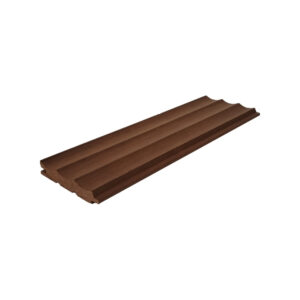
Both Red Cedar and thermo-treated aspen can make attractive sauna benches. Pieksäwood’s thermo-treated aspen bench boards are a strong choice if you want a smooth, knot-free and resin-free surface with a warm brown finish. Red Cedar offers a different appearance and its distinctive wood aroma. The better choice depends on the finished boards, the sauna’s design and which qualities matter most to its users.
Which wood feels cooler on a sauna bench?
There is no reliable basis for saying that thermo-treated aspen always feels cooler than Red Cedar. Both can provide a comfortable seating surface, but how hot a bench feels depends on the finished product and the conditions in the sauna. A claim that one consistently outperforms the other would require comparable measurements.
Pieksäwood describes its thermo-treated aspen bench boards as smooth and comfortable to sit on. For a bench, that finish matters: people remain in contact with the wood for much longer than with a wall panel. Compare physical samples and check the faces and edges that will touch skin.
What does heat treatment add to aspen?
Pieksäwood heat-treats wood with controlled heat and steam, without adding chemical preservatives. The process gives aspen a brown tone, reduces moisture absorption and improves dimensional stability compared with untreated aspen. Pieksäwood carries out the treatment at its facility in Pieksämäki.
Heat treatment does not remove knots. Pieksäwood offers knot-free thermo-treated aspen bench boards, but it also produces knotty thermo-treated aspen panels. If an uninterrupted bench surface is important, confirm that the specific bench board is described as knot-free.
How do the woods compare in durability?
Red Cedar is valued for its natural durability. Thermo-treatment improves aspen’s moisture-related properties compared with untreated aspen. Neither fact establishes which of two finished sauna benches will last longer. Board quality, installation, ventilation, cleaning and intensity of use all influence service life.
Pieksäwood’s care guidance recommends drying wooden surfaces thoroughly after sauna use and providing adequate ventilation. These steps remain important for thermo-treated wood as well.
Does the scent matter?
Red Cedar’s recognisable aroma is an important part of its appeal to many sauna users. Thermo-treated aspen offers a different scent experience, but it should not be described as odourless: Pieksäwood says its heat-treated wood has a pleasant wood aroma.
People’s scent preferences vary. If the sauna is intended for many users, ask for samples and consider how the materials smell in person. Neither wood should be marketed as allergy-proof or guaranteed to prevent irritation.
Which is the more sustainable choice?
Assess the sourcing and production of the particular products being compared. Pieksäwood says it uses certified aspen among its raw materials and manufactures its wood products in Pieksämäki. These are useful details for buyers who value documented material origin and Finnish production.
A shorter transport route may matter for a European project, but distance alone does not establish the total environmental impact. Forest management, processing, transport and service life also need to be considered before calling either bench material the more sustainable option.
When should you choose thermo-treated aspen?
Choose Pieksäwood’s thermo-treated aspen bench boards if you want the verified qualities of those products: a smooth, knot-free and resin-free surface, a brown tone and wood manufactured in Finland. Choose Red Cedar if its particular grain, colour and aroma are central to your sauna design.
Before deciding, compare samples of the actual products and confirm their dimensions, finish and care instructions. Contact Pieksäwood directly to discuss your sauna project and request further details about their thermo-treated aspen bench boards.