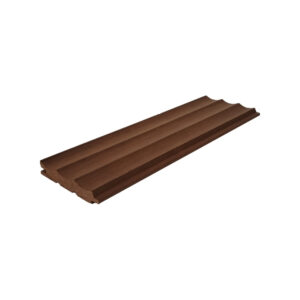
A long-lasting sauna starts with choosing the right panels and bench boards from the beginning. The wood species, whether it has been thermally modified, and the precision of the manufacturing process all determine how well your sauna holds up to heat, moisture, and daily use over decades. The sections below answer the most important questions about sauna wood so you can make confident, informed decisions.
What makes sauna panels and bench boards last for decades?
Sauna panels and bench boards last for decades when they are made from the right wood species, processed to handle extreme humidity and temperature swings, and installed with proper ventilation. The combination of material quality, manufacturing precision, and correct installation creates a sauna interior that resists warping, cracking, and discoloration over the long term.
Wood in a sauna is exposed to conditions that would damage most interior materials. Temperatures regularly exceed 80 degrees Celsius, and humidity swings from dry to saturated within a single session. Wood that has not been selected and processed specifically for these conditions will swell, shrink, and eventually split. Knot-free, resin-free timber is especially important for bench boards, because resin pockets become dangerously hot and can cause burns on bare skin.
Long-lasting sauna wood also depends on dimensional accuracy. Boards that are milled to precise tolerances fit together tightly, leave the correct expansion gaps, and stay stable as the sauna cycles through heating and cooling. Rough or inconsistently milled timber creates weak points where moisture collects and decay begins.
What is the difference between thermally modified and untreated sauna wood?
Thermally modified wood has been heat-treated at temperatures between roughly 160 and 230 degrees Celsius in a controlled, steam-based process that permanently changes its cellular structure. Untreated sauna wood retains its natural moisture content and properties. The key difference is durability: thermally modified wood absorbs significantly less moisture, resists biological decay more effectively, and remains dimensionally stable under repeated heat and humidity cycles.
During thermal modification, the sugars and starches that fungi and bacteria feed on are broken down. This makes the wood naturally resistant to rot without any chemical preservatives. The process also reduces the wood’s equilibrium moisture content, which means it swells and shrinks far less than untreated timber when the sauna heats up and cools down.
Untreated aspen and black alder are already well-suited to sauna environments and perform excellently in indoor saunas with good ventilation. Thermally modified wood becomes the stronger choice for saunas that face particularly demanding conditions, outdoor use, or situations where maximum longevity with minimal maintenance is the priority. We offer both options in aspen and black alder, as well as thermally modified radiata pine, giving builders and homeowners the flexibility to match the material to the specific demands of their project.
Which wood species is best for sauna panels and bench boards?
Aspen and black alder are the best wood species for sauna panels and bench boards. Both are knot-free and resin-free, which means they heat evenly, stay smooth to the touch even at high temperatures, and will not release sticky resin that can stain skin or towels. Aspen in particular is the traditional Finnish choice for sauna interiors and has been trusted for generations.
Aspen is light in color, has a fine, even grain, and remains cool enough to sit on even in a very hot sauna. It tolerates humidity exceptionally well and does not splinter or develop rough surfaces over time. Black alder shares many of these qualities and adds a slightly warmer tone that many sauna builders and interior designers find appealing for creating a more distinctive look.
Thermally modified radiata pine is a practical alternative that offers strong durability at a different price point. It works well for sauna paneling where the visual warmth of a slightly darker wood is desired. However, for bench boards where direct skin contact is constant, aspen and black alder remain the preferred choices because of their naturally smooth, resin-free surfaces. You can explore our full range of sauna panels and bench board products to find the right fit for your project.
How does manufacturing quality affect sauna wood performance?
Manufacturing quality directly determines how sauna wood performs over its lifetime. Precisely planed boards fit together correctly, dry evenly, and resist the warping that comes from inconsistent thickness. Hand-inspected timber eliminates knots, resin pockets, and structural defects before they become problems inside a finished sauna.
The full production chain matters as much as any single step. When the same producer controls sawing, thermal modification, and planing, each stage can be optimized for the next. Timber that has been properly dried before planing holds its dimensions far better than wood that has been rushed through production. Packaging also plays a role: well-protected boards arrive at the installation site without moisture damage, surface marks, or warping caused by poor transport conditions.
We control every stage of production for our aspen products in Pieksämäki, Finland, from sawing our own Finnish aspen through thermal modification in our own facility to final planing and careful packaging. This end-to-end control is what allows us to guarantee consistent quality across every batch, which matters enormously to builders and contractors who need materials to perform identically from one delivery to the next.
How should sauna panels and bench boards be installed for maximum lifespan?
Sauna panels and bench boards should be installed with adequate expansion gaps, using hidden fixings where possible, and with attention to airflow behind the paneling. Leaving space for the wood to move as it absorbs and releases moisture prevents buckling and cracking. Proper ventilation behind wall panels and under bench structures stops moisture from becoming trapped, which is the primary cause of premature decay in sauna interiors.
Before installation, store the timber in the sauna space or a similarly conditioned environment for at least 48 hours. This allows the wood to acclimatize to the room’s humidity level before it is fixed in place, reducing the amount of movement that occurs after installation.
For bench boards, use fixings that allow slight lateral movement. Screwing boards too tightly prevents natural expansion and creates stress points that lead to splitting. Stainless steel or other corrosion-resistant fixings are essential because standard steel will rust quickly in the humid sauna environment, staining the wood and weakening the structure.
How do you maintain sauna wood to keep it looking new?
Sauna wood stays looking new with regular cleaning, adequate ventilation after each use, and occasional light sanding of bench surfaces. Avoiding harsh chemical cleaners and keeping the sauna dry between sessions are the two most important habits for preserving both the appearance and the structural integrity of the wood over many years.
After each sauna session, leave the door open or the ventilation running until the interior has dried completely. Moisture that sits on wood surfaces for extended periods encourages graying and, eventually, mold. A quick wipe-down of bench boards with a clean cloth after use removes sweat and salt that can darken the wood surface over time.
When bench boards begin to look gray or feel slightly rough, light sanding with fine-grit sandpaper restores a fresh surface. Aspen and black alder respond well to sanding and return to a clean, pale appearance after even a single pass. Sauna-specific wood oils or waxes can be applied to bench boards if desired, though many sauna users prefer to leave the wood untreated to preserve its natural breathability and the classic feel of unfinished timber. If you have questions about which option suits your sauna best, feel free to contact our sauna wood specialists for guidance.