Sauna bathing can help relieve certain types of headaches, particularly tension headaches, by promoting muscle relaxation, improving circulation, and triggering the release of endorphins. However, the relationship between sauna use and headache relief is not universal. For migraine sufferers especially, the heat and dehydration that come with sauna use can sometimes worsen symptoms rather than ease them. The sections below unpack exactly when sauna helps, when it can backfire, and how to use it wisely.
Can heat and steam actually relieve headache pain?
Yes, heat and steam can genuinely relieve headache pain, particularly for tension-type headaches. The warmth dilates blood vessels, improves circulation to tense muscles in the neck and shoulders, and encourages the body to release endorphins, its natural pain-relieving compounds. Steam also helps open airways, which can ease sinus-related head pressure. For many people, the combination of these effects produces real, noticeable relief.
The mechanism behind heat-based headache relief is well understood. Tension headaches are often rooted in muscle tightness around the head, neck, and upper back. When you sit in a sauna, the sustained warmth loosens those muscles, reducing the physical tension that contributes to the pain. At the same time, the parasympathetic nervous system, the part of the body responsible for rest and recovery, becomes more active in the heat, which helps dial down stress-driven headache triggers.
Steam specifically can make a meaningful difference for sinus headaches. Congestion and sinus pressure create a dull, heavy pain across the forehead and behind the eyes. The warm, humid air in a steam-rich sauna helps thin mucus and encourages drainage, which often brings noticeable pressure relief within a single session.
What types of headaches respond best to sauna?
Tension headaches and sinus headaches respond best to sauna use. Tension headaches, which are the most common type and typically feel like a tight band around the head, are strongly linked to muscle tension and stress, both of which sauna heat directly addresses. Sinus headaches driven by congestion also respond well to the warm, humid environment of a sauna session.
Cluster headaches, which are severe and occur in cyclical patterns, are less predictable in their response to heat. Some people report temporary relief from warmth, while others find that any circulatory change during a cluster period intensifies the pain. If you experience cluster headaches, it is worth consulting a healthcare professional before using sauna as a management tool.
Dehydration headaches, which are common and often underestimated, will not improve in a sauna and are likely to worsen. If your headache is caused by insufficient fluid intake, adding heat and sweating to the equation removes more fluid from the body and deepens the problem. Drinking water before, during, and after any sauna session is essential regardless of why you are there.
Why can sauna trigger migraines in some people?
Sauna can trigger migraines because the combination of heat, dehydration, and rapid blood vessel dilation are all known migraine triggers. Migraines are highly sensitive to changes in the body’s internal environment. The same circulatory changes that relax muscles and relieve tension headaches can, in people prone to migraines, set off the neurological cascade that leads to a full migraine attack.
Dehydration is one of the most significant risks. Even a short sauna session causes meaningful fluid loss through sweat. If a person enters the sauna already mildly dehydrated, or fails to rehydrate adequately during the session, the resulting fluid deficit can directly trigger a migraine. This is particularly relevant for people who use a sauna in the evening after a long day without adequate water intake.
Heat-induced vasodilation, the widening of blood vessels, is another factor. For migraine sufferers, sudden or significant changes in blood vessel diameter can provoke the throbbing, pulsating pain that characterises a migraine attack. The rapid transition from the intense heat of the sauna to a cooler environment can compound this effect, as blood vessels shift quickly in response to the temperature change.
The sensory environment also plays a role. Some saunas, particularly public or commercial ones, may have strong wood treatments, cleaning products, or other chemical scents. For many migraine sufferers, strong smells are a reliable trigger. Choosing a sauna environment with minimal chemical exposure can reduce this particular risk.
How can migraine sufferers use sauna more safely?
Migraine sufferers can use sauna more safely by staying well hydrated, keeping sessions short, avoiding extreme temperature transitions, and choosing sauna environments free from strong chemical smells. The goal is to gain the relaxation benefits of sauna while minimising the physiological triggers that can provoke a migraine attack.
Practical steps that reduce migraine risk in the sauna include:
- Hydrate thoroughly before entering and drink water between rounds, not just after the session ends.
- Keep sessions shorter than usual, particularly when first testing how your body responds. Ten to fifteen minutes per round is a reasonable starting point.
- Avoid abrupt temperature changes by cooling down gradually rather than jumping immediately into cold water or stepping into cold air.
- Choose a time of day when you are well rested and not already stressed or fatigued, as both fatigue and stress independently lower the migraine threshold.
- Avoid sauna during the prodrome phase, the early warning signs of an incoming migraine such as visual disturbances or unusual fatigue. If a migraine is already beginning, sauna is not advisable.
- Select a sauna with natural, untreated wood to minimise exposure to chemical odours that can act as sensory triggers.
Over time, many migraine sufferers find that regular, moderate sauna use actually reduces overall migraine frequency by lowering baseline stress levels and improving sleep quality. The key is building up gradually and paying close attention to how your body responds after each session.
What does the research say about sauna and headache relief?
Research on sauna and headache relief is still developing, but existing evidence supports the idea that regular sauna use reduces stress, improves cardiovascular function, and may lower the frequency of tension headaches over time. Finnish studies on habitual sauna use have consistently shown broad health benefits, though headache relief specifically has not been as extensively studied as cardiovascular or mental health outcomes.
What the research does confirm is that sauna bathing activates the body’s relaxation response, reduces cortisol levels, and improves sleep quality. All three of these effects are relevant to headache management. Chronic stress and poor sleep are among the most common triggers for both tension headaches and migraines, so interventions that reliably address these factors can have a meaningful indirect effect on headache frequency.
There is also growing interest in the role of heat therapy in pain management more broadly. Heat has a well-established effect on muscle relaxation and pain perception, and the full-body immersion of sauna extends these benefits beyond what a localised heat pack can achieve. For tension headaches in particular, this systemic relaxation effect is clinically plausible and consistent with what many regular sauna users report from personal experience.
It is worth noting that individual variation is significant. The same sauna session that brings relief to one person may provoke a headache in another, depending on hydration status, migraine predisposition, stress levels, and how the body handles heat. Personal observation over several sessions is the most reliable guide.
Are there sauna wood or material choices that affect headache comfort?
Yes, the wood and materials used in a sauna can meaningfully affect headache comfort, particularly for people sensitive to smells, resins, or chemical treatments. Natural, untreated woods that do not emit strong odours or volatile compounds create a cleaner sensory environment, which matters most for migraine-prone individuals for whom scent is a reliable trigger.
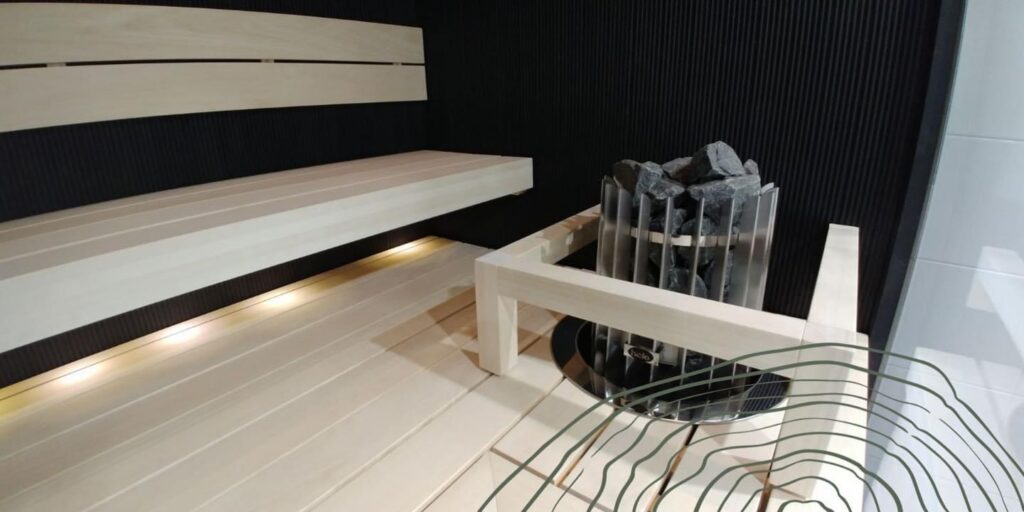
Aspen is one of the most recommended sauna woods for people with sensory sensitivities. It is naturally resin-free and odourless when heated, which means it does not release the sharp, piney compounds that some people find irritating. Its surface stays smooth and comfortable even at high temperatures, and it does not overheat to the touch, making the physical experience of the sauna more comfortable. We use high-quality aspen as the primary material in our sauna benches precisely because of these properties.
Black alder is another excellent choice. Like aspen, it is knot-free and resin-free, and it handles heat and humidity exceptionally well without warping or releasing irritating compounds. Both aspen and black alder are available in heat-treated form, which further stabilises the wood and extends its lifespan in the demanding sauna environment.
Woods with high resin content, such as untreated pine or spruce, can release stronger scents when heated. For most people, this is simply a pleasant wood smell, but for migraine sufferers who are sensitive to odours, it can be enough to trigger a headache. Choosing a sauna lined with resin-free wood is a straightforward way to reduce this particular risk without compromising the sauna experience in any other way.