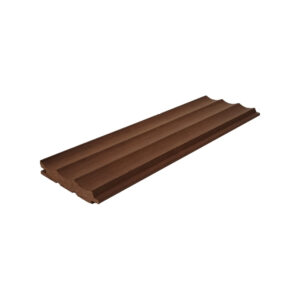
Thermal treatment transforms regular aspen wood into a more durable and stable material through controlled heat application. This process creates distinct differences in appearance, performance, and applications compared to untreated aspen wood.
Understanding these differences helps you choose the right material for your specific project needs, whether you’re building a sauna, creating interior panels, or planning other woodworking projects.
What is thermal aspen, and how is it made?
Thermal aspen is regular aspen wood that has undergone a controlled heat-treatment process, reaching temperatures of 175–210 degrees Celsius for 1.5 to 3 days. This treatment uses only heat and steam, without any chemicals or toxins, making it completely eco-friendly.
The thermal treatment process begins by rapidly heating the wood to 100 degrees Celsius to dry it completely. Once fully dried, the temperature slowly increases to the target range of 175–210 degrees, depending on the wood species, the thickness of the raw material, and the desired color intensity. Steam protects the wood during treatment, preventing cracking and combustion while influencing the chemical changes within the wood structure.
During this process, water and resin are removed from the wood, fundamentally changing its structure. The wood gradually develops an elegant brown color and acquires a pleasant woody aroma. After the treatment period, the temperature returns to normal levels, leaving behind beautiful, brown, durable wood ready for use.
What’s the difference between thermal aspen and regular aspen wood?
Thermal aspen differs from regular aspen primarily in color, stability, and moisture resistance. While regular aspen has a light, pale appearance, thermal aspen develops an elegant brown color throughout the entire wood structure during the heat-treatment process.
These structural changes create significant performance differences. Regular aspen retains its natural moisture-absorption properties and can experience more movement as humidity changes. Thermal aspen, having had water and resin removed during treatment, becomes more dimensionally stable and less prone to warping or shrinking.
The treatment also affects the wood’s aroma. Thermal aspen develops a pleasant, distinctive woody scent that many find appealing, while regular aspen has a more neutral odor. Both materials maintain aspen’s naturally smooth surface, which remains comfortable even in high-heat environments like saunas.
Why is thermal aspen more durable than regular aspen?
Thermal aspen achieves greater durability because the heat-treatment process removes water and resin from the wood structure, reducing its ability to absorb moisture and making it more resistant to decay and dimensional changes.
The removal of these natural compounds during thermal treatment creates a more stable material. With less moisture-absorption capacity, thermal aspen experiences reduced expansion-and-contraction cycles that typically cause regular wood to warp, crack, or deteriorate over time. This stability is particularly valuable in environments with varying humidity levels.
The chemical changes that occur during thermal treatment also contribute to improved longevity. The process alters the wood’s cellular structure in ways that enhance its resistance to biological degradation while maintaining the natural properties that make aspen suitable for applications like sauna construction, where comfort and safety are important.
What are the best applications for thermal aspen versus regular aspen?
Thermal aspen works best for applications requiring enhanced durability and dimensional stability, such as exterior paneling, moisture-prone areas, and situations where the rich brown color adds aesthetic value. Regular aspen suits applications where the natural light color is preferred and extreme durability isn’t required.
For sauna construction, both materials perform well due to aspen’s naturally smooth surface, which doesn’t become uncomfortably hot. Thermal aspen offers the advantage of improved moisture resistance in the humid sauna environment, and its elegant brown appearance appeals to those seeking a more distinctive look.
Interior paneling can benefit from either option, depending on design preferences. Regular aspen provides a clean, light appearance that works well in Scandinavian or minimalist designs. Thermal aspen’s brown tones suit spaces where warmer, more sophisticated wood tones complement the overall design scheme.
Does thermal treatment affect the cost and availability of aspen?
Thermal treatment increases the cost of aspen due to the additional processing time, energy requirements, and specialized equipment needed for the heat-treatment process. The 1.5- to 3-day treatment period, plus the controlled heating and cooling phases, adds significant production time and cost.
Availability can be more limited than for regular aspen, since thermal treatment requires specialized facilities and expertise. Not all wood processors offer thermal treatment services, which can affect supply chains and lead times for projects requiring thermal aspen.
However, the investment in thermal treatment often provides value through improved durability and reduced maintenance requirements over time. The enhanced stability and moisture resistance can result in longer-lasting installations, potentially offsetting the higher initial material costs through reduced replacement and maintenance expenses.
At Pieksäwood, we handle the complete thermal treatment process in our modern facility in Pieksämäki, Finland, ensuring quality control throughout the entire production chain—from sawing Finnish aspen to the final thermal treatment and planing of our wood products.
Ready to choose the perfect aspen for your project?
Whether you need the natural beauty of regular aspen or the enhanced durability of thermal aspen, our team is ready to help you select the ideal material for your specific requirements. With our expertise in both traditional and thermal wood processing, we can guide you through the decision-making process and ensure you get the best results for your sauna, interior paneling, or construction project. Contact our experts today to discuss your project needs and discover how our premium Finnish aspen can bring your vision to life.