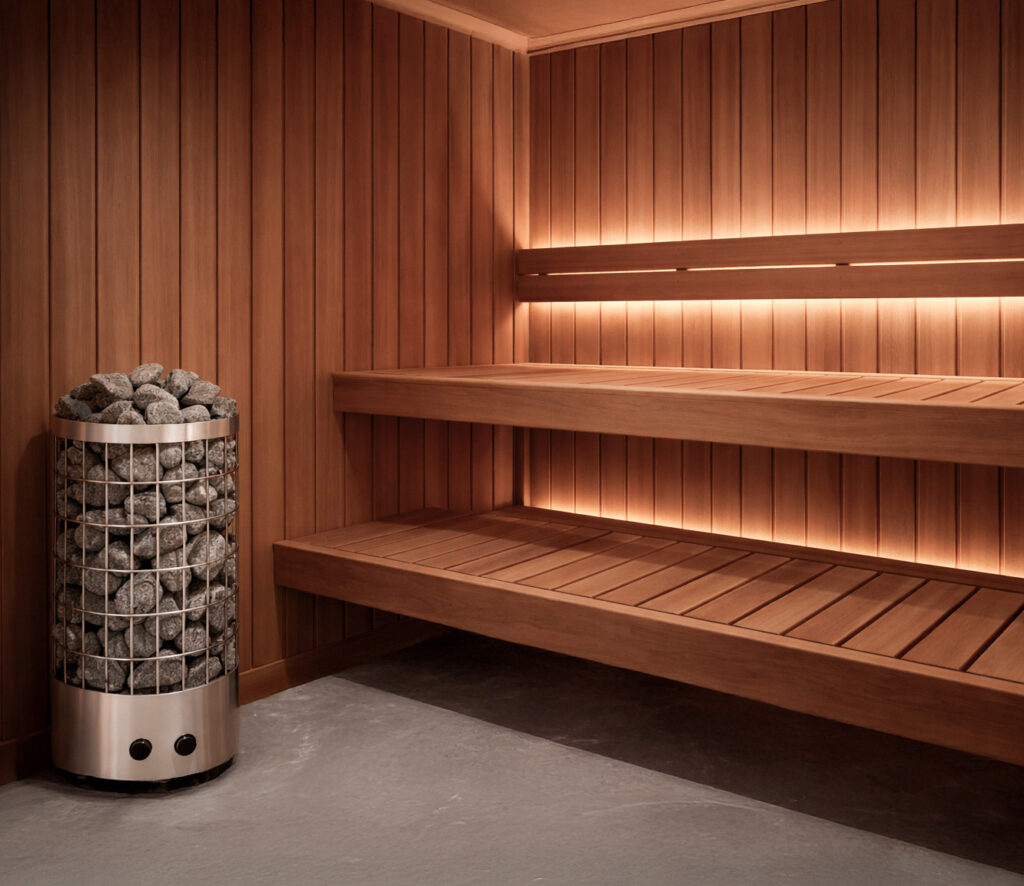
Building a sauna that lasts starts with choosing the right materials and wood species, then combining them with smart design and minimal but consistent maintenance. A truly sustainable sauna uses responsibly sourced, durable wood that handles extreme heat and humidity without warping, cracking, or off-gassing harmful substances. The questions below cover everything from material selection to long-term care.
What materials make a sauna truly sustainable?
A truly sustainable sauna is built from natural, responsibly sourced wood that is free from resins, knots, and chemical treatments that could release harmful substances under heat. The most sustainable sauna materials combine low environmental impact during production with exceptional longevity in use, reducing the need for replacement or repair over time.
Wood remains the gold standard for sauna interiors because it is renewable, biodegradable, and naturally regulates moisture. Species like aspen and black alder are especially well suited because they are knot-free and resin-free, which means they stay safe and comfortable even at high temperatures. Thermally modified wood takes this further by extending the material’s lifespan without chemical additives.
Beyond the wood itself, sustainability in sauna design also means thinking about insulation, ventilation, and the overall construction quality. A well-insulated and properly ventilated sauna heats efficiently, uses less energy per session, and dries out thoroughly between uses, which dramatically extends the life of every wooden surface inside.
Why does wood species matter for sauna longevity?
Wood species determines how a sauna material behaves under repeated cycles of intense heat and moisture. Not all wood handles these conditions equally. The wrong species can warp, crack, release resin, or develop hot spots that make the surface uncomfortable to touch, shortening both the sauna’s lifespan and the quality of the experience.
Aspen is widely regarded as one of the finest sauna woods available. It is naturally light in colour, extremely low in resin content, and has a smooth, even surface that does not overheat. This makes it safe and pleasant to sit on even during powerful steam sessions. Aspen is also dimensionally stable, meaning it resists warping as it absorbs and releases moisture through repeated use.
Black alder shares many of aspen’s qualities and adds a warm, reddish-brown tone that deepens beautifully with age. Like aspen, it is knot-free and resin-free, with a surface that stays comfortable at high temperatures. Both species are excellent choices for sauna benches and wall panelling because they combine aesthetic appeal with genuine functional durability.
Softwoods like pine can work in certain sauna applications but carry a higher resin content, which can become problematic at elevated temperatures. Thermally modified pine is a better option if pine is preferred, as the modification process significantly reduces resin activity and improves moisture resistance.
What is thermally modified wood, and is it better for saunas?
Thermally modified wood is natural wood that has been heat-treated at temperatures typically between 160 and 230 degrees Celsius in a controlled, oxygen-free environment. No chemicals are added. The process permanently alters the wood’s cell structure, reducing its ability to absorb moisture, improving dimensional stability, and increasing resistance to decay. For sauna use, thermally modified wood is often the superior long-term choice.
The modification process changes the wood in several important ways. The wood becomes darker in colour, giving it a rich, uniform appearance that many designers find attractive. It also becomes significantly more stable, meaning it expands and contracts less as humidity levels fluctuate, which is exactly the condition a sauna interior faces every time it is used and then cooled.
We have over 20 years of experience working with thermally modified wood, particularly aspen and black alder. This depth of knowledge means the modification process is carefully controlled to preserve the wood’s natural qualities while maximising its performance in demanding environments like saunas and wet rooms.
One important consideration is that thermally modified wood can become slightly more brittle than unmodified wood, so precise machining and careful handling during installation matter. When sourced and processed correctly, however, it outperforms untreated wood in longevity, making it a sound investment for any eco-friendly sauna project.
How do you design a sauna interior that ages well?
A sauna interior ages well when it is designed for airflow, moisture management, and ease of cleaning. The key principles are using the right wood in the right places, ensuring benches and wall panels can breathe freely, and avoiding design choices that trap moisture or create areas where heat distributes unevenly.
Bench design and positioning
Benches should be built with gaps between boards to allow air circulation underneath and around each surface. This prevents moisture from pooling and speeds up the drying process after each session. Boards should run horizontally where possible and be secured in a way that allows for minor natural movement without cracking or splitting.
Wall panelling and ventilation
Wall panels should be installed with a small gap at the bottom to allow cool air to enter and warm, moist air to rise and exit through a properly positioned vent near the ceiling. This convective airflow keeps the wood drier between sessions and prevents the long-term moisture damage that shortens a sauna’s lifespan. Choosing smooth, planed panels without surface coatings allows the wood to breathe naturally and makes cleaning straightforward.
Corners, junctions between benches and walls, and the area around the heater are the zones most vulnerable to moisture accumulation and heat stress. Designing these areas with slightly wider tolerances and selecting the most stable wood species for these spots pays dividends over years of use.
What maintenance does a sustainable sauna actually need?
A well-built sauna made from quality wood needs very little maintenance. The most important routine is ensuring the sauna dries out completely after every use. This means leaving the door slightly ajar after each session to allow moisture to escape and running the sauna at a low temperature for a short period after bathing if condensation is heavy.
Beyond drying, the main tasks are periodic cleaning and occasional inspection of the structure. Benches and wall panels can be cleaned with a mild sauna-specific cleaner or simply warm water and a soft brush. Avoid harsh detergents that strip the wood’s natural surface or leave residues that could off-gas when the sauna heats up again.
Thermally modified wood and naturally resin-free species like aspen and black alder require no surface treatments or oils to perform well. This is one of their key advantages in an eco-friendly sauna context: the wood does its job without ongoing chemical intervention. If a surface begins to look worn after many years of use, light sanding is usually sufficient to refresh it.
Inspect the ventilation system regularly to make sure airflow is unobstructed. Check bench fixings annually, as the repeated expansion and contraction of wood under heat can loosen screws over time. Tightening fixings and replacing any damaged boards promptly prevents small issues from becoming structural problems.
Where do you source high-quality sustainable sauna wood?
High-quality sustainable sauna wood should come from suppliers who control the full production chain, from responsible raw material sourcing through to precise machining and quality inspection. This end-to-end control is what ensures consistency in grade, moisture content, and dimensional accuracy, all of which directly affect how the wood performs in a sauna environment.
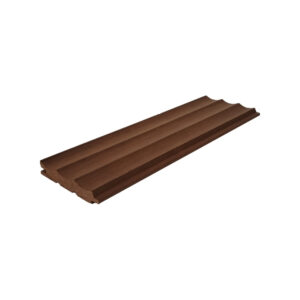
We manufacture our sauna products in Pieksämäki, Finland, operating our own aspen sawmill and thermal modification facility on the same site where all products are planed and inspected by hand. This means every board that leaves our facility has been processed under controlled conditions using responsibly sourced Finnish aspen and black alder. Our wood products for sauna interiors covers sauna benches, wall panels, and trim in both thermally modified and unmodified versions, as well as thermally modified radiata pine for customers seeking a different aesthetic.
When evaluating any supplier, look for clear information about the origin of the raw material, the species used, whether the wood is knot-free and resin-free for sauna applications, and how quality is verified before shipping. A supplier who can answer these questions confidently and who manufactures domestically with traceable materials is the most reliable foundation for a sauna built to last. Contact us to discuss your sauna project and find out how we can help.