The most sustainable sauna materials are naturally durable, low-emission woods that come from responsibly managed forests and require minimal chemical treatment. Finnish aspen and black alder stand out as benchmark choices, combining excellent heat and moisture resistance with a clean, resin-free composition that is safe for both people and the environment. The questions below unpack each factor that matters when choosing materials for a sauna that lasts and leaves a lighter footprint.
What makes a sauna material truly sustainable?
A truly sustainable sauna material is one that is sourced responsibly, processed with minimal environmental impact, performs well over a long lifespan, and does not release harmful substances when heated. Sustainability is not just about the forest of origin; it covers the entire chain from raw material to finished product, including how the wood is dried, treated, and transported.
Several factors define sustainability in the context of sauna wood. The species must grow in managed forests where harvesting is balanced with regeneration. Processing should use as little energy and as few chemicals as possible. And the material itself must be durable enough that it does not need to be replaced frequently, because a long service life is one of the most effective ways to reduce environmental impact over time.
Local sourcing plays a significant role. Wood that travels thousands of kilometres before it reaches a sauna carries a much larger carbon footprint than wood grown, sawn, and finished in the same region. Finnish sauna wood products and materials benefit from a short and transparent supply chain, which makes traceability straightforward and emissions comparatively low.
Why is Finnish aspen considered ideal for sauna use?
Finnish aspen is considered ideal for sauna use because it is naturally resin-free, knot-free in premium grades, and has a smooth, light surface that stays comfortable to the touch even at high temperatures. It absorbs and releases moisture evenly, resists warping well, and does not emit the sticky or sharp compounds that some conifers release when heated.
Aspen is a fast-growing deciduous species that regenerates naturally across Finnish forests. It is harvested as part of normal forest management, which means its use supports rather than depletes healthy woodland ecosystems. From a purely practical standpoint, aspen benches feel pleasant against bare skin because the wood does not conduct heat aggressively, reducing the risk of burns during a hot sauna session.
We source and saw Finnish aspen ourselves in Pieksämäki, in the heart of Savo, which means we control the quality and origin of the raw material from the very first cut. This full chain of custody, from forest to finished sauna bench, is what allows us to guarantee both the quality and the responsible origin of every piece of aspen that leaves our production.
What is thermally modified wood and how does it perform in a sauna?
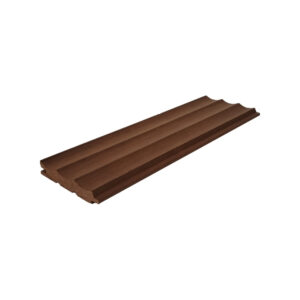
Thermally modified wood is wood that has been treated with high heat and steam, typically between 160 and 230 degrees Celsius, without any chemicals. The process permanently changes the wood’s cell structure, reducing its moisture absorption, increasing its dimensional stability, and giving it a rich, warm brown tone. In a sauna environment, thermally modified wood performs exceptionally well.
The key performance benefit in a sauna is stability. Untreated wood expands and contracts as humidity rises and falls during each sauna session. Thermally modified wood does this far less, which means benches and panels stay flatter, tighter, and more durable over years of regular use. The reduced moisture absorption also makes the wood more resistant to mould and biological decay.
Because the modification process uses only heat and water vapour, thermally modified wood is entirely free of chemical additives. When the wood heats up in a sauna, it does not release synthetic compounds into the air. This makes it a genuinely eco-friendly sauna wood choice for those who want long-term durability without compromising indoor air quality.
We offer thermally modified aspen, black alder, and radiata pine, all processed in our own modern thermal modification facility in Pieksämäki. The result is a material that combines the natural beauty of Finnish wood with significantly enhanced performance characteristics.
How does black alder compare to aspen for sauna benches?
Black alder and aspen are both excellent choices for sauna benches, and both are resin-free and knot-free in their premium grades. The key difference is in their tone and density. Black alder has a slightly warmer, reddish-brown natural colour and is somewhat denser than aspen, which gives it a slightly different tactile feel and visual character. Both species perform reliably in the heat and humidity of a sauna.
Aspen tends to be lighter in colour, with a pale, almost white surface that brightens a sauna interior. Black alder has more natural warmth and a slightly richer grain pattern, making it a popular choice for those who want a more distinctive look without the deep colour of thermally modified wood. Both species are smooth against bare skin and do not become uncomfortably hot during use.
From a sustainability perspective, both species are well-suited to responsible Finnish forestry. Black alder often grows in wetland and riparian forest areas, where it plays an important ecological role. Using it as a sauna material gives value to timber that arises naturally from forest management in those zones. Choosing between the two largely comes down to the visual result you want and the specific performance characteristics that matter most for your sauna project.
Which sauna materials should you avoid for health and environmental reasons?
You should avoid resinous softwoods like untreated spruce or pine as primary sauna bench materials, as well as any wood that has been treated with chemical preservatives, stains, or varnishes not specifically rated for sauna use. These materials can release harmful compounds when heated, creating an unpleasant and potentially unhealthy sauna environment.
Resinous woods are problematic because heat causes the resin to soften and sometimes bleed from the surface. This can make the bench sticky, produce a strong smell, and in some cases cause skin irritation or minor burns on contact. This is why traditional Finnish sauna culture has always favoured resin-free species for benches and surfaces that come into contact with the body.
Chemically treated wood is a more serious concern. Preservatives, fire retardants, and many surface coatings contain compounds that vaporise at elevated temperatures. In an enclosed sauna space, this means the person using the sauna breathes in those vapours directly. From an environmental standpoint, treated wood is also harder to dispose of responsibly at the end of its life, as it cannot be composted or burned cleanly.
Tropical hardwoods marketed as sauna materials deserve scrutiny too. While some perform well technically, their long transport distances and often opaque supply chains make them a poor fit for anyone prioritising natural sauna materials with a clear environmental profile.
How do you choose sustainable sauna materials for a long-lasting result?
To choose sustainable sauna materials for a long-lasting result, prioritise resin-free domestic species with verified responsible origins, consider thermal modification for surfaces exposed to the most intense heat and moisture, and match the material grade to the specific role it will play in the sauna. The right combination of species, treatment, and quality grade will deliver a sauna that looks good, feels comfortable, and holds up for decades.
Start with the benches, since these receive the most direct contact and the most stress from repeated heating and cooling cycles. Knot-free aspen or black alder, either untreated or thermally modified, are the most reliable choices here. For wall and ceiling panelling, slightly lower grades can be used without compromising the experience, and this is where character-rich options like our Roots collection become worth considering.
The Roots collection Finnish aspen panels highlights the natural beauty of Finnish aspen from the knotty parts of the log, the portions that arise as a side stream from premium production. Rather than treating these as secondary material, we turn them into panels and decorative elements that celebrate the genuine character of the wood, including its natural grain patterns and knot marks. This approach is a practical example of circular economy thinking applied to sauna design.
Finally, think about the full lifecycle. A sauna built with high-quality, responsibly sourced Finnish sauna materials and finished without unnecessary chemical coatings will require less maintenance, resist deterioration longer, and be easier to repair or renew selectively when needed. Investing in quality at the outset is consistently the most sustainable decision you can make. If you would like guidance on selecting the right materials for your project, get in touch with our team.