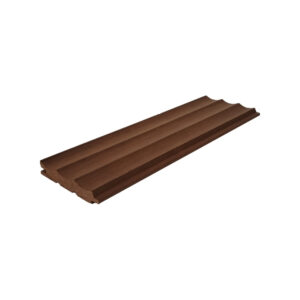
A sustainable sauna is one built from responsibly sourced, long-lasting materials that minimize environmental impact across their entire lifecycle, from forest to finished product. In practice, this means choosing wood species that grow abundantly and regenerate quickly, preferring domestic production to reduce transport emissions, and selecting materials that last for decades without chemical treatments. The questions below unpack each dimension of sustainable sauna building, from wood species and thermal modification to certification and alternative materials.
What makes sauna wood truly sustainable?
Sauna wood is truly sustainable when it comes from responsibly managed forests, requires minimal processing to perform well, and lasts long enough that it does not need frequent replacement. Durability is central to sustainability: a material that endures decades of heat and humidity without warping or decay has a far smaller environmental footprint than one that must be replaced every few years.
Beyond raw material sourcing, sustainable sauna wood should be processed close to where it is harvested. Short supply chains reduce transport emissions and support local economies. Wood that is planed, dried, and finished in the same region where it is grown carries a significantly lower carbon cost than timber shipped across continents before it reaches a sawmill.
The absence of chemical treatments is another key marker. Truly sustainable sauna wood should not rely on synthetic preservatives or coatings to perform in a humid, high-heat environment. Species and treatment methods that achieve durability through natural properties or physical processes, rather than chemical ones, are the most defensible choice from both an environmental and a health perspective.
What’s the difference between thermally treated and untreated sauna wood?
Thermally treated sauna wood has been heated to high temperatures, typically between 160 and 230 degrees Celsius, in a controlled, oxygen-free environment. This process permanently alters the wood’s cellular structure, reducing its moisture absorption, improving dimensional stability, and significantly extending its lifespan in humid conditions. Untreated wood retains its natural properties but is more susceptible to swelling, shrinking, and biological degradation over time.
The thermal modification process uses no chemicals. Heat alone drives out resins and breaks down the sugars that bacteria and fungi feed on, which is why thermally treated wood resists decay without any added preservatives. This makes it an excellent eco-friendly sauna material for environments where untreated wood would require more frequent maintenance or replacement.
In a sauna context, thermally treated wood also tends to stay cooler to the touch at high ambient temperatures, which improves comfort on benches. The trade-off is that thermally treated wood becomes slightly more brittle and darker in color, which many users find aesthetically appealing. We at Pieksäwood have over 20 years of experience with thermal modification, particularly with aspen and black alder, and we carry out the entire process in our own modern facility in Pieksämäki, Finland.
Which wood species are the most sustainable choice for a sauna?
Aspen and black alder are the most sustainable wood species for sauna use. Both grow abundantly in Finnish and Nordic forests, regenerate quickly, and produce knot-free, resin-free timber that performs exceptionally well under sauna conditions without chemical treatment. Their natural properties make them ideal for benches and paneling in both residential and commercial saunas.
Why aspen stands out as a sauna material
Aspen is lightweight, grows fast, and is harvested from forests where it often competes with more commercially valued species, meaning its use can actually improve forest biodiversity. Its smooth, pale surface does not splinter or get uncomfortably hot, and it handles repeated cycles of heat and moisture without significant warping. Aspen is the backbone of the Finnish sauna tradition for good reason.
Why black alder is a strong alternative
Black alder grows in wetland areas and has a natural affinity for moisture, which translates into excellent performance in sauna environments. It is denser than aspen and takes on a rich, warm tone after thermal modification. Like aspen, it is resin-free and knot-free when properly selected, making it comfortable against the skin even at high temperatures.
Thermally treated radiata pine is another option we offer, providing a more affordable entry point while still delivering improved durability and stability compared to untreated softwoods. For those seeking variety in their sustainable sauna wood choices, it broadens the range of aesthetics and price points without compromising on responsible production.
How does domestic production affect a sauna’s environmental footprint?
Domestic production significantly reduces a sauna’s environmental footprint by eliminating long-distance freight, keeping the supply chain transparent, and ensuring that forestry and manufacturing standards are verifiable. When wood is grown, sawn, dried, and finished in the same country, the carbon cost of transportation drops dramatically compared to products that cross multiple borders before reaching a customer.
Transparency is equally important. Domestic production allows buyers to trace materials back to their origin with far greater confidence. Finnish forestry operates under strict sustainability regulations, and products manufactured in Finland are subject to consistent quality and environmental controls throughout the entire process.
We operate a fully integrated production chain in Pieksämäki, Finland. We saw Finnish aspen in our own sawmill, thermally treat the timber in our own facility, and plane and pack every product on site. This means we control quality and environmental standards at every stage, and our customers can be confident about exactly where their sauna materials come from.
What sustainable materials can replace traditional wood in sauna construction?
Wood composite is the most practical sustainable alternative to traditional timber in certain parts of sauna construction, particularly for exterior areas like terraces and surrounding structures. High-quality wood composites made from recycled wood fiber and recycled plastic offer excellent durability, require no maintenance treatments, and divert waste materials from landfill. They are not suitable for the interior sauna room itself due to heat and off-gassing concerns, but they perform well in adjacent spaces.
For the sauna interior, thermally modified wood remains the most sustainable option because it achieves durability through a purely physical process with no synthetic additives. There is currently no material that replicates the thermal comfort, humidity regulation, and natural feel of wood inside a sauna while matching its environmental credentials.
We also offer wood composite decking and fencing made from 60% recycled wood fiber and 35% recycled plastic. The raw materials are entirely non-toxic, making the product safe for people, animals, and the environment. These products have been sold in Finland for over a decade and represent a responsible choice for the outdoor areas surrounding a sauna building.
How can you verify that sauna products are responsibly made?
You can verify that sauna products are responsibly made by checking for recognized third-party certifications, asking suppliers directly about their supply chain, and prioritizing manufacturers who control production from raw material to finished product. Certifications such as FSC or PEFC confirm that the wood originates from forests managed to defined environmental and social standards.
Beyond certification labels, the most reliable indicator of responsible production is supply chain transparency. A manufacturer who saws their own timber, processes it in their own facility, and finishes it on the same site can account for every step. This is fundamentally different from a company that assembles products from multiple anonymous suppliers across different countries.
Ask suppliers the following questions when evaluating sauna materials:
- Where is the raw material sourced, and is it certified?
- Is the manufacturing carried out in-house or outsourced?
- Are any chemical treatments used, and if so, which ones?
- Can the company demonstrate consistent quality control at each production stage?
- How is the product packaged and transported to minimize damage and waste?
A supplier who can answer these questions clearly and specifically, rather than with vague assurances, gives you the strongest basis for confidence. Responsible production is not just about the materials themselves but about the integrity of every decision made along the way from forest to finished sauna. Contact us to ask about our production and we will be happy to answer each of these questions in full.