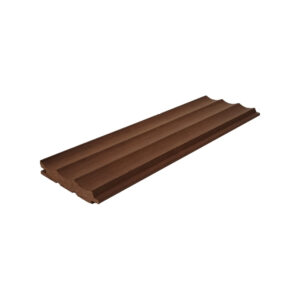
Thermal modification transforms wood through controlled heat treatment, creating a material that performs exceptionally well in sauna environments. This process has become increasingly important for authentic Finnish sauna construction, where wood must withstand extreme temperature fluctuations and high humidity levels.
Understanding how thermal modification works helps you choose the right materials for your Scandinavian sauna project. The process creates wood with enhanced durability, a beautiful appearance, and improved performance characteristics that make it ideal for sauna applications.
What is thermal modification, and how does it work on wood?
Thermal modification is a controlled heat-treatment process that uses temperatures between 175 and 210 degrees Celsius and water vapor to permanently alter wood’s cellular structure. The process takes place in specialized equipment, where wood is heated for 1.5 to 3 days, depending on the wood species and the desired characteristics.
The thermal modification process begins by rapidly heating the wood to 100 degrees Celsius to completely dry the material. Once fully dry, the temperature slowly increases to the target range of 175 to 210 degrees. During this extended heating period, water vapor protects the wood from cracking and burning while facilitating chemical changes within the wood structure.
As the wood undergoes thermal modification, water and resin naturally exit the material. This removal process fundamentally changes the wood’s properties, creating a more stable and durable product. The wood also develops its characteristic rich brown color during this phase, transforming from its original appearance to an elegant, uniform tone.
The final stage involves gradually cooling the wood back to normal temperature. The result is beautiful brown wood with enhanced durability and a pleasant natural aroma that makes it perfect for authentic Finnish sauna environments.
Why is thermally modified wood better for saunas?
Thermally modified wood offers superior performance in sauna environments because the heat-treatment process removes moisture and resins that would otherwise cause problems in high-temperature, high-humidity conditions. The modification creates wood that remains stable and comfortable even during intense sauna sessions.
The thermal modification process eliminates the sticky resins that can make regular wood uncomfortable to touch when heated. This means you can enjoy your Scandinavian sauna experience without worrying about resin bleeding onto your skin or clothing during hot sessions.
Additionally, thermally modified wood demonstrates excellent dimensional stability. The heat treatment reduces the wood’s tendency to expand and contract with temperature and humidity changes, which is particularly important in sauna environments where these conditions fluctuate dramatically.
The modification process also enhances the wood’s natural resistance to moisture-related issues. While maintaining the wood’s breathable properties, thermal treatment helps it better withstand the demanding conditions inside authentic Finnish saunas.
What’s the difference between thermally modified and regular sauna wood?
The primary difference between thermally modified and regular sauna wood lies in stability, appearance, and performance under extreme conditions. Thermally modified wood has undergone permanent structural changes that regular wood lacks, resulting in superior sauna performance.
Regular sauna wood retains its natural moisture content and resin structure. While suitable for many applications, it can release sticky resins when heated and may experience more movement as temperature and humidity change. Its natural color also remains lighter and more varied.
Thermally modified wood, in contrast, has had its moisture and resin content permanently altered through controlled heat treatment. This creates wood with a consistent rich brown color throughout and eliminates the resin bleeding that can occur with untreated materials.
The manufacturing process is completely non-toxic and environmentally friendly, using only heat and water vapor without any chemical treatments. This makes thermally modified wood an environmentally responsible choice for your sauna project while delivering enhanced performance characteristics.
Which wood species work best for thermal modification in saunas?
Aspen and alder are the premier wood species for thermal modification in sauna applications, offering the ideal combination of properties that respond well to heat treatment. These species are naturally resin-free and have smooth surfaces that remain comfortable even during intense sauna sessions.
Aspen stands out as an exceptional choice for thermally modified sauna wood. Its naturally smooth surface becomes even more refined through thermal modification, and the wood maintains a comfortable temperature even during the hottest sauna sessions. The thermal modification process enhances aspen’s already excellent moisture and heat resistance.
Alder also performs excellently when thermally modified for sauna use. Like aspen, it lacks problematic resins and develops beautiful, consistent color through the thermal modification process. Both species are typically knot-free and resin-free, making them ideal candidates for the heat-treatment process.
Thermally modified radiata pine is also an option for sauna applications. While different in character from aspen and alder, properly thermally modified pine can provide good performance in sauna environments when processed correctly.
How long does the thermal modification process take?
The thermal modification process takes between 1.5 and 3 full days to complete, with the exact duration depending on the wood species, the thickness of the material, and the desired color depth. This extended timeframe allows for the gradual chemical changes that create the enhanced properties.
The process cannot be rushed because the wood needs sufficient time at elevated temperatures for the cellular structure to change properly. Thicker pieces of wood require longer processing times to ensure the thermal modification penetrates completely through the material.
Different wood species also require varying processing times to achieve optimal results. The specific characteristics of each species influence how quickly the desired changes occur during thermal modification.
Modern thermal modification facilities use precise temperature and humidity controls to ensure consistent results throughout the extended processing period. This careful control ensures that every piece of wood receives uniform treatment, resulting in consistent quality and performance characteristics.
When you choose thermally modified wood for your authentic Finnish sauna project, you benefit from this careful, time-intensive process. We handle all thermal modification in our modern facility in Pieksämäki, Finland, ensuring that every piece meets the high standards expected for Scandinavian sauna construction. Our 20 years of experience with thermal modification, particularly with aspen and alder, helps us deliver the beautiful, durable thermally modified wood products that make authentic Finnish saunas exceptional.
Ready to start your authentic Finnish sauna project?
Transform your sauna dreams into reality with premium thermally modified wood that delivers exceptional performance and authentic Finnish quality. Our experienced team is ready to help you select the perfect materials for your project and answer any questions about thermal modification, wood species selection, or sauna construction. Contact us today to discuss your specific needs and discover how our thermally modified aspen and alder can create the authentic Scandinavian sauna experience you’ve been envisioning.