Yes, sauna use genuinely helps muscles recover faster. Heat exposure increases blood circulation, relaxes muscle tissue, and supports the removal of metabolic waste products that build up during exercise. These effects are well supported by exercise physiology research and widely used by athletes at all levels. Below, we answer the most common questions about sauna recovery so you can get the most from every session.
How does heat actually repair muscle tissue?
Heat does not directly repair muscle fibers, but it creates the conditions your body needs to do so more efficiently. When you expose your body to sauna heat, blood vessels dilate and circulation increases significantly, delivering more oxygen and nutrients to stressed muscle tissue while accelerating the clearance of lactic acid and other metabolic byproducts. This improved blood flow is the primary driver of faster muscle recovery.
Beyond circulation, heat triggers the production of heat shock proteins, which are cellular compounds that help protect and repair damaged proteins within muscle cells. Regular sauna use also promotes the release of growth hormone, a key signal for muscle repair and adaptation. Together, these mechanisms make heat therapy a genuinely effective tool for supporting the biological processes behind muscle healing, not just a way to feel more comfortable after a hard workout.
How long should you stay in the sauna after a workout?
For muscle recovery, most exercise specialists recommend staying in the sauna for 15 to 20 minutes after a workout. This duration is long enough to meaningfully raise core temperature, increase circulation, and stimulate the physiological responses that support recovery, without placing excessive additional stress on a body that is already fatigued from training.
Beginners should start with shorter sessions of around 10 minutes and build up gradually. It is equally important to hydrate well before entering the sauna, since your body will continue sweating after exercise. Stepping out, cooling down briefly, and re-entering for a second round is a common approach used by athletes to extend the total benefit while giving the body a chance to regulate. Listening to your body matters more than hitting a precise time target.
What’s the difference between a traditional sauna and an infrared sauna for recovery?
The key difference is how each type heats your body. A traditional sauna heats the air around you to high temperatures, typically between 80 and 100 degrees Celsius, which then heats your body from the outside in. An infrared sauna uses light waves to heat your body tissue more directly at lower ambient temperatures, usually between 45 and 65 degrees Celsius, which some people find easier to tolerate for longer sessions.
Traditional sauna for recovery
A traditional sauna, particularly the Finnish style with Scandinavian sauna design, produces intense heat that raises core body temperature quickly. This drives a strong cardiovascular response and significant sweating, which many athletes find effective for deep muscle relaxation. The high heat also creates a more pronounced heat shock protein response. For those accustomed to sauna culture, the traditional approach remains the gold standard for post-workout recovery.
Infrared sauna for recovery
An infrared sauna is often marketed as penetrating deeper into muscle tissue, and while the lower air temperature makes sessions more comfortable, the core recovery mechanisms are broadly similar. The gentler environment can be an advantage for people who are new to heat therapy or who find very high temperatures difficult to manage after intense exercise. Both approaches deliver meaningful recovery benefits, and choosing between them often comes down to personal preference and access.
Does sauna use reduce delayed onset muscle soreness (DOMS)?
Regular sauna use after exercise can meaningfully reduce the severity of delayed onset muscle soreness. DOMS is caused by micro-tears in muscle fibers and the resulting inflammatory response, which typically peaks 24 to 48 hours after unfamiliar or intense exercise. Heat therapy addresses DOMS by improving blood flow to inflamed tissue, which helps resolve the inflammatory process more quickly and reduces the stiffness and tenderness associated with it.
The evidence for this is consistent with what athletes and coaches report from practical experience. A sauna session in the hours following a hard training session does not eliminate DOMS entirely, but it tends to reduce both its intensity and duration. Combining sauna use with adequate hydration, sleep, and proper nutrition produces the best results, since heat therapy supports recovery but does not replace the other fundamentals.
Should you sauna before or after exercise?
For muscle recovery, sauna after exercise is the more effective choice. Using the sauna post-workout allows your body to shift into recovery mode, using the heat-driven increase in circulation to clear metabolic waste and deliver nutrients to fatigued muscles. Pre-workout sauna use, by contrast, raises core temperature and induces sweating before you have even begun training, which can impair performance and increase the risk of dehydration and early fatigue.
There are limited situations where a brief pre-workout sauna session might help, such as warming up stiff muscles in cold conditions or preparing the body for a light mobility session. However, for anyone focused on sauna benefits for athletes and genuine muscle recovery, the post-workout window is where heat therapy delivers the most value. Allow your heart rate to come down naturally after exercise before entering the sauna, and always rehydrate first.
What sauna materials best support a recovery-focused session?
The materials used in a sauna directly affect the quality and comfort of your recovery session. The best sauna benches and paneling are made from wood species that stay cool to the touch even at high temperatures, do not release resins or strong odors when heated, and can withstand repeated exposure to heat and moisture without warping or degrading. For a recovery-focused environment, the wood you sit and lie on matters most.
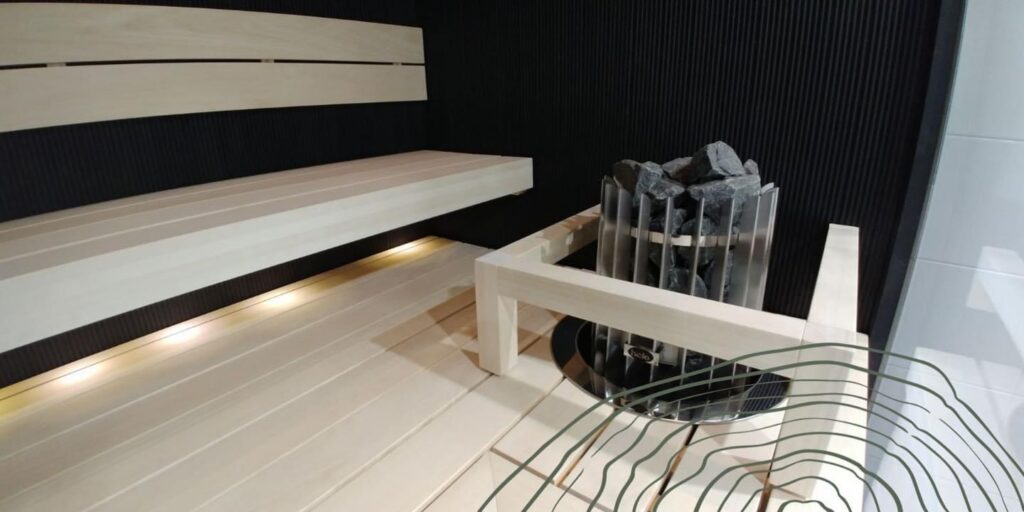
Aspen and black alder are widely regarded as the finest materials for sauna benches. Both are knot-free and resin-free, which means the surface stays smooth and comfortable even during intense heat. They do not overheat the way some denser or more resinous woods do, making long recovery sessions more pleasant. We use high-quality Finnish aspen and black alder as the primary raw materials for our sauna wood products, both in their natural form and as thermally treated wood, which offers enhanced durability and resistance to moisture over time.
Thermally treated wood, sometimes called thermowood, undergoes a heat treatment process that modifies the wood’s structure, making it more dimensionally stable and resistant to the repeated wet and dry cycles of sauna use. For anyone building or upgrading a sauna with recovery in mind, investing in quality bench materials is one of the most practical decisions you can make. The surface you rest on during a recovery session should support relaxation, not distract from it. Contact us to find the right sauna materials for your specific needs.