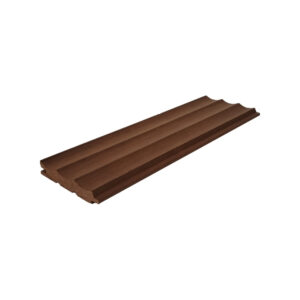
The most effective way to reduce material waste when building a sauna is to plan your material quantities precisely before ordering, choose dimensionally stable wood species, and order cut-to-size timber wherever possible. Waste in sauna construction is rarely accidental – it almost always traces back to poor planning, unsuitable materials, or a lack of knowledge about what to do with off-cuts. The questions below walk through each stage of that process, from calculating wood volumes to choosing the most sustainable materials available.
What causes the most material waste when building a sauna?
The biggest sources of material waste in sauna construction are inaccurate quantity estimates, incorrect wood selection, and poor cutting sequences during installation. Ordering too much timber is the most common mistake, but ordering the wrong dimensions – forcing unnecessary cuts – runs a close second. Together, these two issues account for the majority of off-cuts and discarded material on a typical sauna build.
Beyond quantity errors, wood species choice plays a significant role. Some timbers are more prone to warping, cracking, or surface defects under the heat and humidity of a sauna environment. When boards develop problems after installation, they often need to be replaced entirely, which doubles the material cost and waste. Choosing a species that is naturally suited to sauna conditions from the start eliminates a large proportion of this replacement waste.
Installation technique matters too. Cutting boards without a clear sequence plan leads to short off-cuts that cannot be reused elsewhere, while a well-planned cutting order allows longer pieces to be used first and shorter remnants to fill gaps rather than go to waste.
How do you accurately calculate how much sauna wood you need?
To calculate sauna wood accurately, measure the total surface area of each element – benches, walls, and ceiling – separately, then add a waste allowance of between 10 and 15 percent to account for cutting losses and any defective boards. Working element by element, rather than estimating the whole sauna as one volume, is the single most reliable way to avoid both over-ordering and running short.
Start with the bench structure, since bench boards are often the most expensive component and the most precisely dimensioned. Measure the total linear length of bench boards needed, accounting for the number of rows and the depth of each bench level. Then calculate wall panelling by treating each wall as a rectangle, subtracting door and window openings. Ceiling panels follow the same logic.
When you have your raw area figures, convert them to board metres using the actual coverage width of the profile you plan to use – not the nominal width, which does not account for the tongue-and-groove overlap. This step alone prevents a common calculation error that leads to significant shortfalls. Add your 10 to 15 percent buffer last, and round up to the nearest full pack size to avoid ordering partial quantities that inflate shipping costs.
If you are working with a supplier who offers custom lengths, request boards cut as close to your measured lengths as possible. This eliminates the most wasteful cuts and keeps your off-cut pile minimal from the outset.
Does choosing thermally modified wood reduce sauna waste?
Yes, choosing thermally modified wood significantly reduces sauna material waste because thermally modified timber is far more dimensionally stable than untreated wood. It absorbs and releases moisture much more slowly, which means boards are far less likely to warp, cup, or crack during the repeated heating and cooling cycles of sauna use. Fewer boards fail over time, so replacement waste drops considerably.
Thermal modification is a heat-based process that restructures the wood’s cell walls without any chemical additives. The result is a material that responds to moisture changes gradually and uniformly rather than reacting sharply to humidity spikes. In a sauna environment, where temperatures can exceed 80 degrees Celsius and humidity shifts dramatically between sessions, this stability is not a luxury – it is a practical requirement for long service life.
We have over 20 years of experience in thermal modification, working primarily with aspen and black alder – two species that are already well suited to sauna conditions and become even more durable after treatment. Thermally modified aspen, in particular, combines a smooth, knot-free surface with excellent heat and moisture resistance, making it one of the lowest-waste choices available for sauna benches and panelling.
From a waste reduction perspective, the longer a board stays in good condition, the less frequently it needs to be replaced. Thermally modified wood consistently outperforms untreated alternatives in longevity, which means less material consumed over the full lifetime of the sauna.
What should you do with leftover sauna wood off-cuts?
Leftover sauna wood off-cuts can be repurposed within the sauna itself, used in other areas of the home, or donated rather than discarded. The key is to plan for off-cut reuse before you begin cutting, not after, so that remnant pieces are kept at usable lengths rather than trimmed down to unusable scraps.
Reuse within the sauna build
Short off-cuts work well for smaller sauna elements such as bench supports, backrests, headrests, or accessory hooks. If you are building a traditional Finnish sauna with a layered bench structure, off-cuts from the upper bench boards can often fill shorter runs on the lower bench. Plan your cutting sequence so that the longest boards are cut first and remnants are assigned to shorter elements before any piece is set aside as waste.
Repurpose outside the sauna
Aspen and black alder off-cuts that are too short for sauna use are still high-quality timber. They can be used for small joinery projects, decorative shelf edging, or bathroom accessories such as soap dishes and towel hooks. If you have no immediate use for them yourself, local woodworking groups, school workshops, or community makerspaces will often take clean timber off-cuts at no cost. Burning untreated wood off-cuts in a fireplace or wood stove is also a practical last resort that keeps material out of landfill.
Which sauna materials are the most sustainable to use?
The most sustainable sauna materials are domestically sourced, responsibly harvested hardwoods – particularly aspen and black alder – ideally thermally modified to extend their service life without chemical treatments. Sustainability in sauna construction depends on three factors: where the raw material comes from, how it is processed, and how long it lasts in service.
Aspen is one of the most ecologically sound choices for sauna timber. It grows abundantly in Finland and across Scandinavia, regenerates quickly after harvesting, and requires no chemical preservatives to perform well in a sauna environment. When sourced from responsibly managed forests, aspen carries a very low environmental footprint from forest to finished product.
Black alder shares many of the same qualities. It is a naturally moisture-resistant species that grows in riparian and lowland forests across northern Europe, and it is harvested as part of sustainable forest management programmes. Both species are knot-free and resin-free in their best grades, which means fewer boards are rejected during production and less raw material is lost before a product even reaches the customer.
Thermal modification adds another layer of sustainability by extending the usable life of the timber significantly. A longer-lasting board means fewer replacements over time, which reduces the total volume of wood consumed over the sauna’s lifetime. Because thermal modification uses only heat and steam – no chemicals – the process itself adds no toxic load to the material or the environment.
When evaluating any sauna material, look for clear information about where the wood was grown, how it was processed, and what certifications cover the supply chain. Short, transparent supply chains – where the same producer controls sawing, modification, and finishing – give you the clearest picture of the material’s true environmental impact and make efficient, low-waste sauna construction far easier to achieve. You can explore our thermally modified sauna wood products or get in touch with our team to discuss your project requirements.