Regular sauna use genuinely supports healthy aging and longevity. Research consistently links frequent sauna bathing to lower risks of cardiovascular disease, cognitive decline, and chronic inflammation, all of which accelerate the aging process. The benefits apply most strongly to adults who use a sauna several times per week over many years. Below, we unpack the key questions around sauna use, aging, and how to get the most from this ancient wellness practice.
How does regular sauna use affect the aging body?
Regular sauna use slows several biological markers of aging by reducing chronic inflammation, improving circulation, and triggering cellular repair processes. The repeated heat stress that sauna bathing creates activates heat shock proteins, which help the body maintain and repair damaged cells, a mechanism closely linked to a longer healthspan. These effects accumulate over time, meaning consistent, long-term sauna habits deliver the greatest sauna health benefits.
When the body is exposed to intense heat in a sauna, core temperature rises and the cardiovascular system responds much like it does during moderate aerobic exercise. Heart rate increases, blood vessels dilate, and blood flow improves throughout the body. For older adults, this kind of passive cardiovascular conditioning can be particularly valuable when high-impact exercise is not always possible.
Chronic low-grade inflammation is one of the primary drivers of aging-related disease. Sauna wellness practices appear to reduce inflammatory markers over time, which may help protect against conditions ranging from metabolic syndrome to heart disease. The relaxation response triggered by sauna use also lowers cortisol levels, supporting hormonal balance as the body ages.
What does the research say about sauna use and lifespan?
The most cited body of research on sauna and lifespan comes from long-term Finnish population studies, which found that men who used a sauna four to seven times per week had significantly lower rates of fatal cardiovascular events compared to those who used one only once a week. While these studies show strong associations rather than direct causation, the consistency of the findings across large populations makes the relationship between regular sauna use and longer life compelling.
Finnish research is particularly relevant because sauna culture is deeply embedded in everyday life there, providing large sample sizes over decades. The data suggest that frequency matters: two to three sessions per week show measurable benefits, but the strongest associations with reduced all-cause mortality appear at higher frequencies.
It is important to note that sauna bathing in these populations was typically traditional Finnish sauna, with temperatures between 80 and 100 degrees Celsius and sessions lasting 15 to 20 minutes. The sauna longevity benefits observed are tied to this specific pattern of use rather than occasional or very short sessions.
What are the cognitive benefits of sauna bathing for older adults?
Sauna bathing appears to support brain health in older adults by improving cerebral blood flow, reducing neuroinflammation, and potentially lowering the risk of dementia and Alzheimer’s disease. Finnish research has found associations between frequent sauna use and a reduced risk of dementia, with those using a sauna four to seven times per week showing the most pronounced protective effect compared to infrequent users.
The mechanisms behind these cognitive benefits are not fully understood, but several pathways are likely at work. Improved cardiovascular function from regular sauna use directly benefits the brain, which is highly sensitive to blood flow and oxygen supply. Reduced systemic inflammation also plays a role, since neuroinflammation is a key factor in age-related cognitive decline.
There is also a psychological dimension worth noting. Sauna use reliably reduces stress and promotes deep relaxation, partly through the release of endorphins and the lowering of cortisol. Chronic stress is a known contributor to cognitive aging, so the regular mental reset that sauna wellness provides may offer indirect but meaningful protection for the aging brain.
How does sauna use support muscle and joint health with age?
Sauna use supports muscle and joint health in older adults by improving circulation to soft tissues, reducing muscle soreness, and easing the stiffness associated with conditions like arthritis. The heat penetrates muscles and connective tissue, increasing flexibility and reducing the perception of pain, which can make daily movement more comfortable and support continued physical activity as people age.
For older adults managing joint conditions, the warmth of a sauna session can provide temporary but meaningful relief from discomfort. Improved blood flow to joints supports the delivery of nutrients and the removal of inflammatory byproducts, both of which matter for joint maintenance over time.
Muscle preservation is another consideration. Sarcopenia, the gradual loss of muscle mass with age, is accelerated by inactivity and poor circulation. While sauna use does not replace resistance training, it may complement an active lifestyle by supporting recovery, reducing delayed-onset muscle soreness, and keeping older adults comfortable enough to stay physically active.
How often and how long should older adults use a sauna?
For older adults seeking sauna health benefits, a practical starting point is two to three sessions per week, each lasting 15 to 20 minutes at a comfortable temperature. Research on sauna longevity consistently shows that frequency matters more than session length, and building a sustainable habit over years delivers more value than occasional long sessions.
Older adults should approach sauna use with a few practical considerations in mind:
- Start with shorter sessions of 10 to 15 minutes and gradually increase as the body adapts
- Stay well hydrated before and after each session
- Avoid sauna use immediately after intense exercise or alcohol consumption
- Exit the sauna immediately if dizziness, nausea, or chest discomfort occurs
- Consult a doctor before beginning regular sauna use if managing cardiovascular conditions, blood pressure issues, or other chronic health concerns
Cooling down gradually between rounds, rather than plunging into cold water immediately, is generally advisable for older adults who may be more sensitive to sudden cardiovascular changes. Listening to the body and adjusting session length and temperature accordingly is always the right approach.
What type of sauna is best for longevity benefits?
A traditional Finnish sauna, operating between 80 and 100 degrees Celsius with low to moderate humidity and the option to add steam with löyly, is the type most strongly associated with sauna longevity benefits in long-term research. The evidence base for traditional sauna is far larger than for infrared or steam room alternatives, making it the most well-supported choice for adults focused on healthy aging.
Infrared saunas operate at lower temperatures, typically between 45 and 65 degrees Celsius, and are often marketed as gentler alternatives. While some users find them more comfortable, particularly those who struggle with high heat, the research on infrared sauna and longevity is much less extensive. Infrared use may still offer relaxation and circulation benefits, but it should not be assumed to deliver the same outcomes as a traditional sauna.
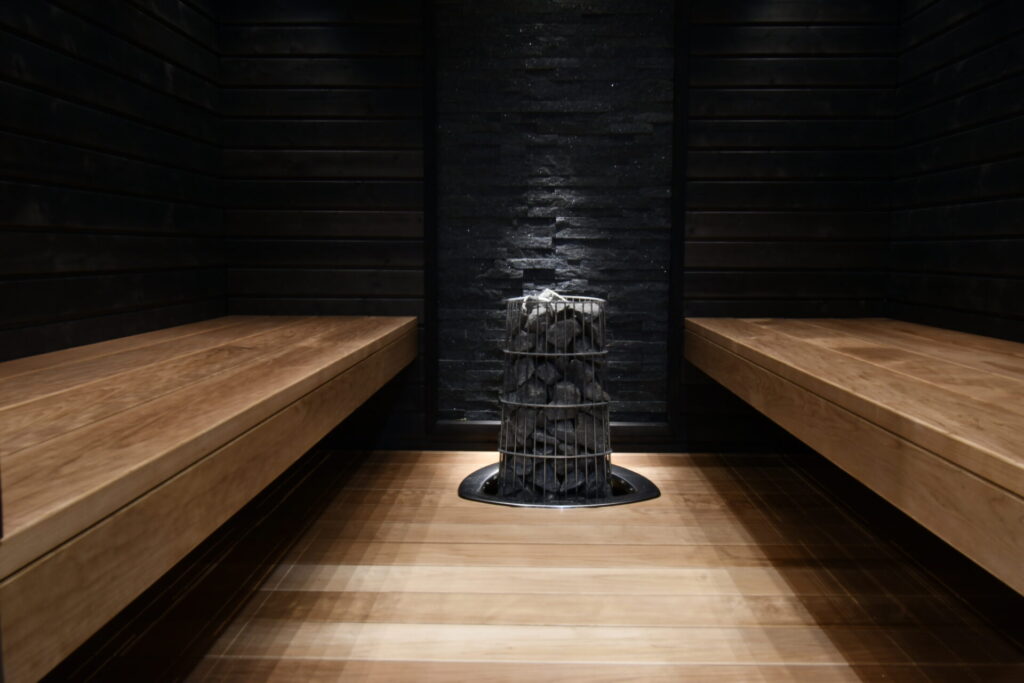
For those building or renovating a sauna space, the materials used matter as much as the heat source. Quality sauna benches and panelling wood products made from the right wood species contribute directly to the experience and durability of the sauna environment. We craft our sauna benches and panels from knot-free, resin-free aspen and black alder, both heat-treated and untreated, because these materials stay comfortable to the touch even at high temperatures and stand up to years of humidity and heat without warping or degrading. A well-built sauna made from quality materials is one you will use consistently, and consistency is exactly what the research on sauna aging rewards. If you would like to learn more about our materials or discuss your sauna project, feel free to get in touch with our team.