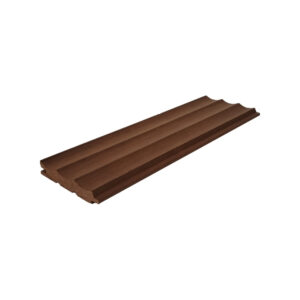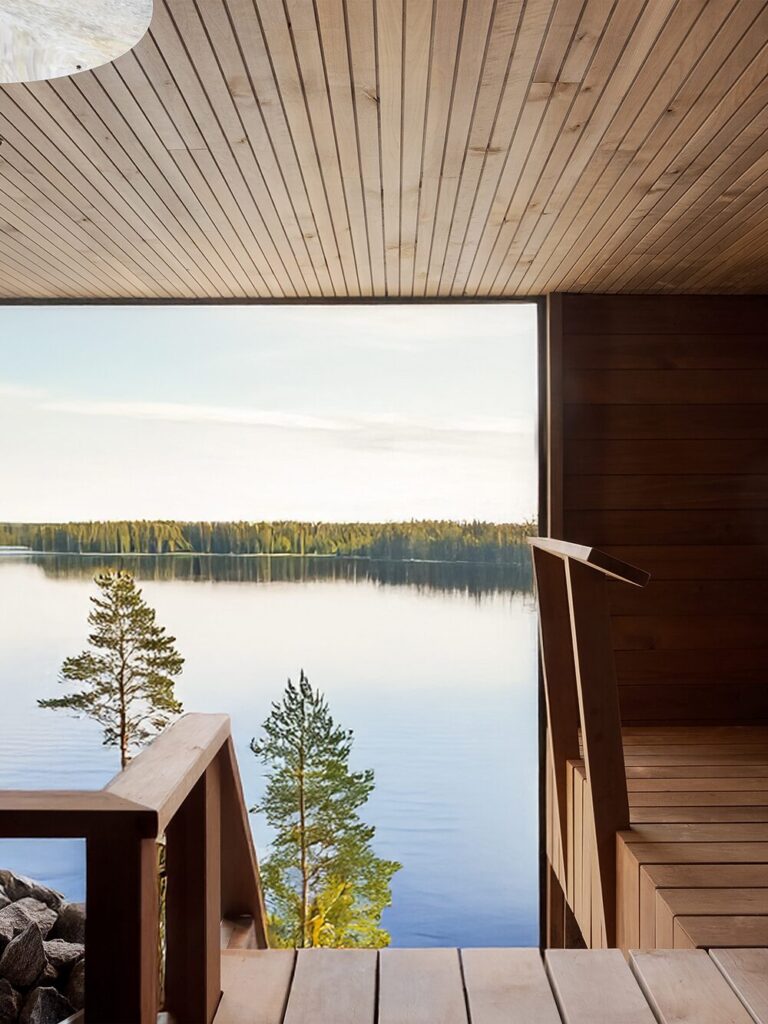
Locally produced sauna panels from Finland are crafted from Finnish-grown aspen and black alder, processed entirely within Finland from raw log to finished panel. This domestic production chain ensures consistent quality, responsible sourcing, and the kind of hands-on craftsmanship that imported alternatives simply cannot replicate. The sections below answer the most important questions about Finnish sauna wood panels, from raw material to finished installation.
What makes Finnish-grown wood ideal for sauna panels?
Finnish-grown aspen and black alder are ideal for sauna panels because they are naturally knot-free, resin-free, and dimensionally stable under the extreme heat and humidity of a sauna. Their smooth, dense surface stays comfortable to the touch even at high temperatures, making them the safest and most pleasant materials for sauna paneling and benches.
Aspen, in particular, grows slowly in Finland’s northern climate, which produces tight, even grain and a naturally pale, harmonious appearance. The wood does not contain the resins that cause pine to become sticky and uncomfortably hot against bare skin. Black alder shares many of these properties and adds a slightly warmer tone that many sauna builders and interior designers find appealing.
Finnish forests are managed under strict sustainability standards, which means the raw material is consistently high in quality and responsibly sourced. Because we source and saw our own Finnish aspen at our mill in Pieksämäki, we control the quality of the timber from the very beginning of the production chain, selecting only the wood that meets our specifications for sauna use.
What is thermally modified sauna wood and how does it differ from untreated wood?
Thermally modified sauna wood is wood that has been heat-treated at high temperatures using only hot air and steam, with no chemicals involved. This process permanently changes the wood’s cellular structure, making it more resistant to moisture, more dimensionally stable, and darker in color. Untreated wood retains its natural pale tone but is more susceptible to swelling and shrinkage over time.
During thermal modification, the wood is heated to temperatures typically between 180 and 230 degrees Celsius. This breaks down the sugars and starches in the wood that attract moisture and microorganisms. The result is a material that absorbs and releases moisture far more slowly than untreated wood, which significantly extends its service life in the wet-dry cycles of a sauna environment.
The visual difference is also notable. Thermally modified aspen takes on a rich, warm brown tone that many people associate with a classic sauna aesthetic. Untreated aspen keeps its naturally light, almost white appearance, which suits contemporary and Scandinavian interior styles. Both versions are knot-free and resin-free, so the choice between them is primarily about appearance and the level of moisture resistance required for the specific installation.
We operate our own modern thermal modification facility in Pieksämäki, where we process both our own sawn aspen and timber sourced from other suppliers. This means the modification parameters are precisely controlled, and every batch of thermally modified sauna wood panels leaves our facility meeting the same quality standard.
How are sauna panels manufactured when produced locally in Finland?
Locally produced Finnish sauna panels go through a fully integrated manufacturing process: the timber is sawn, optionally heat-treated, then precision-planed and hand-inspected before packaging. When every stage happens in the same location, quality is controlled at each step rather than relying on third-party suppliers or distant production facilities.
Our production in Pieksämäki follows this sequence from start to finish. Finnish aspen logs arrive at our own sawmill, where they are cut to the dimensions needed for panel production. The sawn timber is then dried and, where specified, moved into our thermal modification unit. After modification or drying, every board passes through our planer to achieve the precise surface profile and dimensions required.
The final inspection is done by hand. Each panel is checked individually before packaging, which means surface defects, dimensional inconsistencies, or any other quality issues are caught before the product reaches the customer. This manual inspection step is something that high-volume, automated production lines in distant markets often skip, and it is one of the clearest practical advantages of local, small-batch manufacturing.
What should you look for when choosing quality sauna panels?
When choosing quality sauna panels, look for knot-free and resin-free wood species, precise planing, consistent dimensions, and clear information about where and how the wood was processed. These factors directly affect both the safety and the longevity of the finished sauna.
The species matters first. Aspen and black alder are the benchmark materials for sauna paneling because they stay cool against skin and do not release resins when heated. Pine and spruce can work in some applications but carry a higher risk of resin bleed in high-temperature environments.
Beyond species, consider the following quality indicators:
- Surface quality: Panels should be smooth and evenly planed, with no torn grain, raised fibers, or mill marks.
- Dimensional accuracy: Consistent thickness and width across a batch ensures clean installation without gaps or misalignment.
- Moisture content: Panels should be dried to an appropriate moisture content for interior use before they leave the factory.
- Transparency of origin: A reputable supplier will tell you exactly where the wood was grown and where it was processed.
- Packaging: Well-packaged panels arrive without damage, surface contamination, or moisture absorption during transit.
If you are considering thermally modified sauna wood panels, also ask about the modification process itself. Chemical-free thermal modification using only heat and steam is the standard for sauna use, and any reputable producer should be able to confirm this without hesitation. You can explore our full range of Finnish sauna and interior wood products to find the right solution for your project.
Why does local production matter for sauna panel quality and sustainability?
Local production matters because it shortens the supply chain, reduces the number of quality handoffs, and makes responsible sourcing verifiable. When sauna panels are manufactured close to where the raw material grows, the producer can control every stage of the process and stand behind the finished product with full traceability.
From a quality perspective, a shorter production chain means fewer opportunities for the wood to be exposed to inconsistent storage conditions, moisture fluctuations, or handling damage. It also means the producer has a direct relationship with the timber source, which makes it easier to select the right raw material for each product grade.
From a sustainability perspective, local production reduces transport emissions significantly. Finnish aspen grown, sawn, modified, and planed in Pieksämäki travels a fraction of the distance compared to panels produced in Asia or even other parts of Europe. The responsible forest management practices required under Finnish and EU regulations also provide a level of environmental assurance that is harder to verify in distant supply chains.
There is also a broader economic and cultural dimension. Supporting locally produced Finnish sauna panels means supporting the skills, jobs, and manufacturing knowledge that have developed in Finnish wood-processing communities over generations. For customers who value provenance alongside performance, this is a meaningful part of what they are buying. If you would like to discuss your specific requirements, feel free to contact us directly about your project.
Where are locally produced Finnish sauna panels used?
Locally produced Finnish sauna panels are used in private home saunas, holiday cottages, hotel and spa facilities, public swimming halls, and high-end interior design projects. The same material properties that make them ideal for traditional saunas also make them suitable for any interior space where natural wood paneling is desired.
In residential settings, aspen sauna panels are the most common choice for both walls and ceilings, while thermally modified versions are increasingly popular for their richer color and enhanced durability. Black alder is often selected for bench surfaces because of its particularly smooth, comfortable texture under bare skin.
In commercial and public spaces, the durability and consistent appearance of professionally manufactured sauna wood panels make them a practical specification for architects and interior designers. Hotels, wellness centers, and public bathing facilities require materials that perform reliably under heavy daily use, and Finnish-made panels with documented quality standards are well suited to these environments.
Beyond saunas, the same aspen and black alder panels are used for interior wall cladding in living rooms, hallways, and bathrooms, where their natural warmth and tactile quality add character to contemporary interiors. The Roots collection of natural Finnish aspen panels, for example, celebrates the natural knot character of Finnish aspen to create surfaces that bring the feeling of a Finnish forest directly into a room, whether that room is a sauna or a living space.