Scandinavian sauna design pairs knotty aspen panels with clean, minimal interiors to create a warm, natural atmosphere rooted in Nordic tradition. Aspen has been the wood of choice in Finnish and Scandinavian saunas for generations because it stays cool to the touch, resists moisture exceptionally well, and fills the sauna with a soft, honey-toned glow. The questions below unpack everything you need to know about choosing, installing, and maintaining knotty aspen panels for a true Nordic sauna interior.
What makes knotty aspen the traditional wood of Scandinavian saunas?
Knotty aspen is the traditional wood of Scandinavian saunas because it combines a naturally smooth, resin-free surface with excellent heat resistance and a light, neutral colour that brightens the sauna interior. Its knots are not defects but natural features that give each panel a distinctive character, connecting the sauna space visually to the surrounding Nordic forest.
Aspen grows abundantly across Finland and Scandinavia, which made it the most accessible and practical sauna timber for centuries of Nordic builders. Unlike pine or spruce, aspen contains no pitch or resin, so it never becomes sticky or releases irritating compounds when the temperature rises. This makes it genuinely safe and comfortable against bare skin on the bench or wall.
The knots in knotty aspen panels are a mark of the wood’s origin from the outer, more characterful sections of the log. Where knot-free premium aspen has been the standard for decades, knotty aspen represents a growing appreciation for the full, honest beauty of the tree. Each panel carries unique grain patterns and natural knot formations that make a sauna interior feel alive rather than uniform. At Pieksäwood, our Roots collection was born precisely from this philosophy: honouring the parts of the Finnish aspen tree that were previously treated as secondary material and turning them into something genuinely beautiful.
How does knotty aspen perform compared to other sauna panel woods?
Knotty aspen performs better than most sauna panel woods in the conditions that matter most: heat tolerance, surface comfort, and moisture resistance. Compared to pine, it contains no resin and stays cool to the touch even at high temperatures. Compared to spruce, it is harder and more dimensionally stable. Compared to alder, it is lighter in colour and typically more affordable.
The practical differences become clear during a sauna session. Pine and spruce panels can ooze resin when heated, creating sticky patches and a sharp smell that some users find unpleasant. Aspen, whether knotty or knot-free, simply does not have this problem. Its thermal conductivity is low, which means the surface warms gradually and never becomes uncomfortably hot against skin.
Knotty aspen is sometimes compared unfavourably to knot-free grades because knots can, in theory, behave differently from the surrounding wood under repeated heating and cooling cycles. In practice, when the panels are properly dried and manufactured to high tolerances, this is rarely an issue. The key is sourcing from a producer who controls the full manufacturing chain, from sawing to planing, so that moisture content and surface quality are consistent across every board.
Thermally treated aspen takes performance a step further. The thermal modification process uses only heat and steam, with no chemicals, to make the wood darker, more dimensionally stable, and even more resistant to moisture. This is worth considering for saunas that see heavy, frequent use.
What does ‘Scandinavian sauna design’ actually look like?
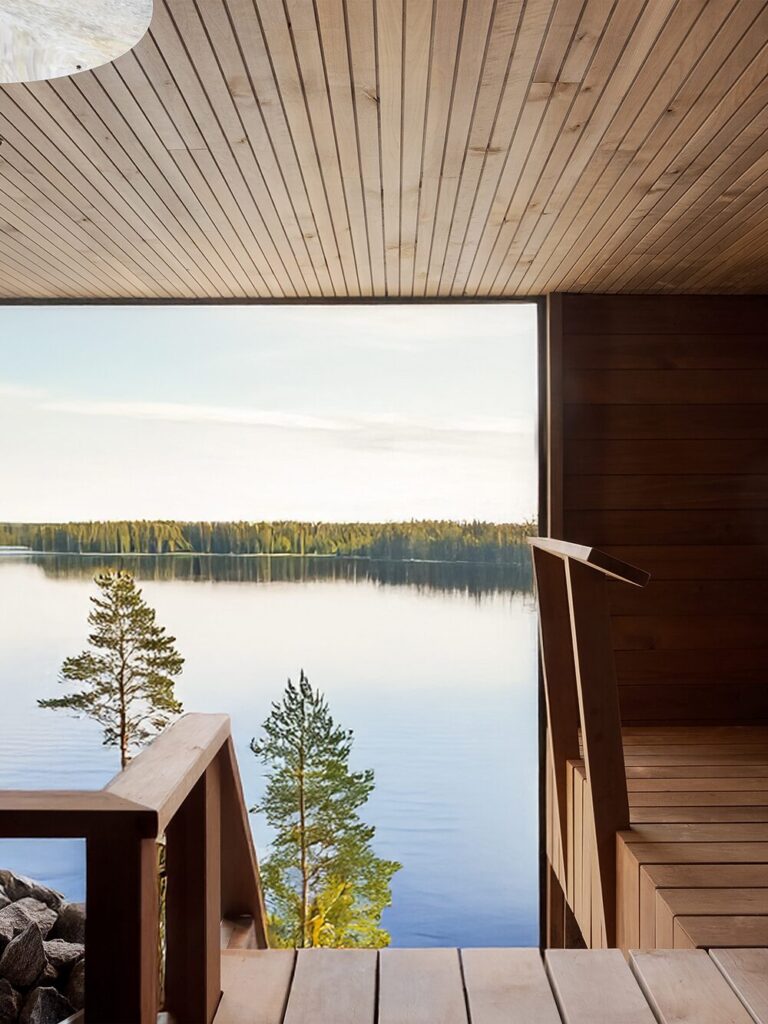
Scandinavian sauna design is characterised by clean lines, natural wood surfaces, minimal ornamentation, and a strong connection to the surrounding landscape or natural light. The aesthetic prioritises honesty of materials over decoration: the grain of the wood, the warmth of the stone, and the glow of a simple light source do all the visual work.
In a traditional Nordic sauna, the walls and ceiling are clad in horizontal or vertical wood panels, the benches are built from the same or a complementary timber, and the stove sits as the functional centrepiece. Colour palettes lean toward the natural tones of the wood itself, from pale cream through warm honey to deep brown depending on whether the aspen is natural or thermally treated.
Key elements of the Nordic sauna interior
- Wall and ceiling panels: Light-toned aspen or alder panels, often installed horizontally to emphasise the width of the space
- Bench construction: Wide, smooth boards with rounded edges, typically in knot-free aspen or alder for maximum comfort
- Lighting: Warm, low-level lighting recessed into the bench structure or tucked behind panels to avoid glare
- Stove and stones: The kiuas, or sauna stove, is the functional and visual anchor of the room
- Minimal accessories: A wooden ladle, a bucket, and a thermometer are the only essentials
Contemporary Scandinavian sauna design has expanded this vocabulary to include thermally treated dark aspen panels alongside pale natural ones, creating contrast within the same space. Knotty aspen panels add organic texture and visual interest that fits perfectly within this modern Nordic aesthetic, where the imperfections of natural materials are celebrated rather than hidden.
Should you choose natural or thermally treated aspen panels for your sauna?
Choose natural aspen panels if you want a lighter, more traditional Nordic look and your sauna is used regularly but not continuously. Choose thermally treated aspen panels if you want a darker, richer tone, greater dimensional stability, and superior long-term moisture resistance, particularly in saunas that see very heavy use or have limited ventilation.
Natural aspen has the pale, almost white-cream colour that defines the classic Scandinavian sauna interior. It brightens the space, reflects light warmly, and develops a gentle patina over time. It is the right choice for anyone who values the traditional aesthetic and is committed to regular maintenance and ventilation.
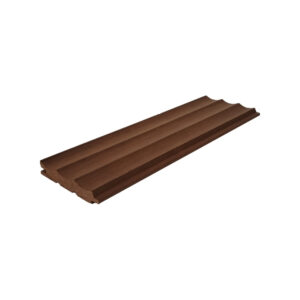
Thermally treated aspen undergoes a process in which the wood is heated to high temperatures using only hot air and water vapour, with no chemicals involved. This modifies the cell structure of the wood, making it darker in colour, less prone to swelling and shrinking with changes in humidity, and more resistant to the biological processes that can degrade untreated wood over time. The result is a panel that looks and feels premium, with a warm brown tone that complements both traditional and contemporary sauna interiors.
We produce both natural and thermally treated aspen sauna panels and wood products at our facility in Pieksämäki, where we control every stage from sawing the Finnish aspen to the final planing and inspection. This means the thermal modification is applied to our own timber, not bought-in material, which ensures consistent quality across the full range.
How do you install aspen wall and ceiling panels in a sauna?
Install aspen sauna panels by first fixing a horizontal or vertical batten framework to the walls and ceiling to create an air gap behind the panels, then clip or nail the panels to the battens starting from the floor or one edge and working systematically across the surface. Always leave a small expansion gap at the edges to allow the wood to move with changes in humidity.
Preparing the sauna structure
Before any panels go up, the sauna must have proper vapour and thermal insulation in place. A vapour barrier behind the insulation prevents moisture from penetrating the wall structure. The batten layer, typically 20 to 25 mm thick, sits in front of the vapour barrier and creates the ventilation channel that allows air to circulate behind the panels and carry moisture away from the wood.
Fitting the panels
Aspen panels typically have a tongue-and-groove profile, which makes installation straightforward. The first panel is fixed with face nails or screws at the edge that will be covered by a trim strip. Subsequent panels are clipped or secretly nailed through the tongue so that fixings are hidden. Work steadily across the surface, checking alignment regularly. On the ceiling, work from one side to the other in the same direction as the panels run.
Around the stove and pipe penetrations, use non-combustible spacers and follow the stove manufacturer’s clearance guidelines precisely. Trim strips and corner profiles in matching aspen give the installation a clean, finished appearance. Allow the panels to acclimatise in the sauna space for at least 48 hours before installation to reduce the risk of movement after fitting.
How do you maintain knotty aspen sauna panels over time?
Maintain knotty aspen sauna panels by ventilating the sauna thoroughly after every use, cleaning the surfaces periodically with a soft brush or mild sauna cleaner, and treating the wood with a sauna-specific oil or wax when the surface begins to look dry or grey. With consistent care, aspen panels will last for many years and develop a beautiful, natural patina.
Ventilation is the single most important maintenance habit. After each sauna session, open the door and any ventilation hatches and allow the room to dry completely before closing it. Moisture trapped in a closed sauna is the primary cause of darkening, mould growth, and premature wear in any sauna wood, including aspen.
For regular cleaning, a soft brush and warm water are usually sufficient. Avoid harsh detergents, which can strip the natural surface of the wood and leave residues that affect the sauna experience. Purpose-made sauna cleaners are available and safe to use on aspen panels when the instructions are followed.
Surface treatment is optional for aspen but can extend the life and appearance of the panels. A light coat of sauna wax or oil, applied once or twice a year depending on use, helps the wood resist moisture absorption and makes the surface easier to clean. Use only products specifically formulated for sauna interiors, as standard wood oils and varnishes are not suitable for high-temperature, high-humidity environments.
Knotty aspen panels, because of the natural variation around the knots, may show slightly uneven ageing over time. This is part of the character of the material and can be embraced as part of the organic, Nordic aesthetic. If a panel becomes damaged or heavily discoloured, individual boards can usually be replaced without disturbing the rest of the installation, which is one of the practical advantages of tongue-and-groove panel systems. Contact us to discuss your sauna project and find the right aspen panels for your needs.