Wellness architecture has moved well beyond the traditional backyard sauna. Architects, spa developers, and interior designers working on hotels, public bathhouses, fitness centers, and residential wellness retreats are now specifying sauna materials with the same precision they bring to structural and facade elements. The choice of wood species, surface treatment, and supply chain reliability all shape the final result. For professionals who need a dependable sauna wood supplier capable of meeting the demands of complex, large-scale projects, understanding the material options and the production standards behind them is the starting point for confident specification.
At Pieksäwood, we have been producing premium Finnish sauna wood in Pieksämäki, Finland, since 1948. With more than 75 years of experience and two decades of specialization in thermal modification, we supply architects, sauna manufacturers, construction companies, and wellness project developers across Europe. This article walks through the key material and supply considerations that matter most when specifying sauna wood for professional projects.
Wood Species That Define Wellness Space Design
The species of wood used in a sauna or wellness interior does more than determine visual character. It directly influences thermal comfort, surface behavior under heat and humidity, longevity, and the sensory experience of the space.
Aspen is the benchmark species for sauna interiors, and for good reason. It is virtually knot-free and resin-free, which means the surface remains smooth and splinter-free even after years of thermal cycling. Aspen does not overheat to the touch, making it the preferred choice for sauna benches in environments where users sit or lie directly against the wood. Its light, clean appearance also aligns well with contemporary Nordic and Scandinavian design aesthetics that dominate modern wellness architecture.
Black Alder: A Premium Alternative with Distinctive Character
Black alder offers a richer, warmer tone that suits wellness spaces designed to feel more intimate or luxurious. Like aspen, it is low in resin and performs well under the heat and moisture conditions typical of sauna environments. Its fine grain and consistent surface make it equally suitable for sauna paneling, bench construction, and decorative trim elements. For architects seeking to differentiate a wellness project through material warmth and visual depth, black alder is a strong specification choice.
Both species are sourced responsibly from Finnish forests, where sustainable forestry practices are embedded in national regulation and industry culture. We saw our own aspen at our facility in Pieksämäki, giving us direct control over raw material quality from the point of harvest through to the finished product. This end-to-end chain is unusual in the industry and gives specifiers a clear, traceable origin story for the materials they use.
How Thermal Modification Elevates Material Performance
Thermally modified wood is produced by heating timber to high temperatures in a controlled, oxygen-limited environment. No chemicals are involved. The process permanently alters the wood’s cellular structure, improving its resistance to moisture absorption, biological decay, and dimensional movement.
For wellness and sauna applications, these changes are directly relevant. Sauna environments subject wood to repeated cycles of high heat, steam, and cooling. Untreated wood absorbs and releases moisture with each cycle, which over time causes warping, cracking, and surface degradation. Thermally modified wood is significantly more stable under these conditions, maintaining its form and surface quality over a much longer service life.
What Thermal Modification Changes in Practice
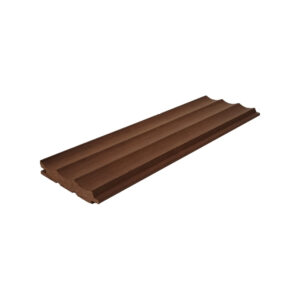
The modification process darkens the wood to a rich, even brown tone. This means thermally modified aspen or black alder takes on a deeper aesthetic character compared to its untreated counterpart, which can be a design advantage in wellness spaces that favor warm, natural palettes. The surface also becomes less hygroscopic, meaning it absorbs less moisture and dries more quickly between sauna sessions.
We have operated our own thermal modification facility in Pieksämäki for over 20 years. This in-house capability means we apply consistent process parameters to every batch, and we are not dependent on third-party modification services that may vary in quality or scheduling. For architects and procurement teams specifying thermally modified sauna wood, this consistency is a meaningful quality assurance point. We also offer thermally modified radiata pine as part of our range, providing an additional option for projects where cost efficiency is a factor alongside performance.
Professionals seeking to understand the broader context of sauna, spa, and wellness material innovation can explore current industry developments through events such as interbad, the leading international trade exhibition for swimming pools, saunas, and wellness. The exhibition brings together manufacturers, designers, and construction professionals from across the world and serves as a key reference point for specification trends. More information is available on the official interbad website.
Specifying Sauna Wood for Commercial and Public Projects
Commercial and public wellness projects introduce a layer of complexity that residential sauna work does not. Higher user volumes, longer daily operating hours, stricter maintenance cycles, and the need for consistent visual quality across large surface areas all place greater demands on the materials specified.
For architects and project managers working on hotel spas, fitness club saunas, or public bathhouse renovations, the specification process should account for several practical factors beyond species and treatment type.
Dimensional Consistency and Surface Quality
In large installations, panels and bench elements need to fit together precisely and present a uniform surface. Variation in thickness, width, or surface finish becomes visible at scale and creates problems during installation. We plane all our products at our own facility in Pieksämäki, and every piece is inspected by hand before packing. This manual quality check, combined with modern production equipment, ensures that dimensional tolerances are tight and surface quality is consistent across batches.
Custom Dimensions and Project-Specific Requirements
Standard product dimensions work well for many projects, but commercial wellness spaces frequently require custom lengths, profiles, or surface treatments. We work flexibly with architects and contractors to accommodate project-specific requests, including non-standard dimensions and tailored product configurations. This flexibility is particularly valuable in the early specification phase, when design intent is still being translated into material schedules.
For sauna manufacturers producing their own bench ranges or prefabricated sauna modules, a reliable upstream supplier matters just as much as the manufacturing process itself. Consistent raw material quality directly determines the consistency of the finished product, which is why many professional sauna builders prioritize a supplier that controls its own production chain.
Sustainability Credentials That Support Green Building Goals
Sustainable material specification is no longer a differentiator for premium projects alone. Green building frameworks, corporate sustainability commitments, and client expectations are pushing sustainability to the center of material selection across all project types. Finnish sauna wood is well positioned within this context.
Finland’s forestry sector operates under some of the most rigorous sustainability regulations in the world. Forest coverage in Finland has increased over recent decades, and the country’s timber industry is built around the principle that harvesting rates must remain within the limits of natural regeneration. When architects specify Finnish wood, they are drawing on a supply chain embedded in this culture of responsible stewardship.
Thermal Modification as a Chemical-Free Treatment
One of the sustainability advantages of thermally modified wood is the absence of chemical preservatives or treatments. The modification process uses only heat and steam, producing a material that is safe for indoor use in environments where people are in close physical contact with surfaces. This is particularly relevant for sauna benches, where users sit directly on the wood. The chemical-free nature of the process also simplifies end-of-life disposal, as the material does not carry the contamination concerns associated with treated timber.
For projects pursuing green building certifications or reporting on embodied carbon, the short supply chain from Finnish forest to finished product is also an advantage. We manage the full production process in Pieksämäki, from sawing through modification to planing and packing. Fewer transport legs and processing stages mean a lower overall footprint compared to products that pass through multiple facilities in different countries.
What Reliable Supply Looks Like for Large-Scale Projects
Material quality and supply reliability are equally important for professional buyers. A specification that cannot be fulfilled on time, at the right volume, or with consistent quality across multiple deliveries creates real project risk. For architects and procurement managers working on large wellness developments, understanding what a supplier’s production model actually looks like is a practical due diligence step.
Our production model is built around vertical integration. We operate our own sawmill, our own thermal modification facility, and our own planing line, all in Pieksämäki. This means we are not assembling products from components sourced across multiple suppliers. We control each stage of production, which gives us the ability to maintain quality standards, respond to custom requests, and plan production schedules with genuine flexibility.
Consistency Across Repeat Orders
For hotel chains, spa groups, or sauna manufacturers placing repeat orders over time, material consistency between deliveries matters. Color variation, dimensional drift, or changes in surface character between batches create problems in installation and visual continuity. Because we control our own raw material supply through our own sawmill and apply consistent process parameters in our modification facility, repeat orders match original specifications reliably.
Fast, Personal Service for Professional Buyers
Large-scale projects often move quickly and require responsive communication. We work directly with our professional clients, offering fast responses and the ability to adapt to changing project requirements without the delays that come with multi-tier distribution. For architects and project managers who need clear answers on lead times, volumes, and custom options, direct access to our team simplifies the procurement process considerably.
In 2026, the international wellness construction market continues to grow, driven by expanding hotel and resort development, increased public investment in health and recreation infrastructure, and a broader cultural shift toward well-being environments. For professionals specifying materials within this market, the combination of material expertise, production control, and supply reliability that a vertically integrated Finnish sauna wood supplier offers is a genuine project asset. Whether the application is a boutique hotel spa, a public swimming complex, or a large residential wellness development, the material decisions made at the specification stage shape the quality and longevity of the finished space.