When the international sauna, spa, and wellness industry gathers in Stuttgart this autumn, the conversations happening on the exhibition floor will shape how professionals across Europe specify, source, and build sauna interiors for years ahead. Interbad Stuttgart is that kind of event. It sets the direction. For us at PieksaWood, participating in Interbad 2026 is not simply about showing up with samples. It is an opportunity to demonstrate, face to face, why the choice of wood is the single most consequential decision in any sauna project, and why Finnish aspen and black alder remain the benchmark materials for sauna interiors worldwide.
This article walks through exactly what we bring to Interbad Stuttgart, the material science behind our core species, how thermal modification transforms wood performance, and what full production control from log to finished panel actually means for the professionals who specify our products. Whether you are a sauna manufacturer, architect, spa developer, or distributor, the following sections are written to give you a clear, practical picture of what distinguishes premium Finnish sauna wood from everything else on the market.
What PieksaWood brings to Interbad Stuttgart
Interbad Stuttgart is the leading international trade fair for swimming, sauna, spa, and wellness. Held every two years at Messe Stuttgart, it draws thousands of professionals from across Europe and beyond, including architects, hotel developers, sauna manufacturers, contractors, and procurement specialists. The event covers everything from pool technology to wellness architecture, but the sauna and spa segment sits at its core. Professionals who need to stay current with materials, design trends, and supplier capabilities attend precisely because the exhibition concentrates the entire industry in one place. More information about the event is available on the official Interbad website.
What we bring to Interbad Stuttgart in 2026 is the full breadth of our sauna wood expertise, built over more than 75 years of manufacturing in Pieksämäki, Finland. Our stand will feature sauna panels, bench boards, and interior trim profiles in our core species: Finnish aspen, black alder, and thermally modified variants of both. Visitors will be able to handle the finished surfaces directly, compare profiles, and speak with our team about specifications, lead times, custom dimensions, and the production process behind every piece. For B2B buyers who rely on consistent quality across large volumes, that kind of direct access to the manufacturer is genuinely valuable.
A manufacturer, not a middleman
One point we want to make clearly at Interbad is that PieksaWood is a manufacturer with its own sawmill, its own thermal modification facility, and its own planing line, all located in Pieksämäki. When a distributor or sauna builder places an order with us, they are dealing directly with the people who produce the wood. There is no intermediary, no rebranded stock from an anonymous source. That transparency matters when quality and traceability are non-negotiable requirements.
We also have over 20 years of specific experience in thermal modification, which is not a common depth of expertise among wood product manufacturers. That accumulated knowledge informs how we process each species, how we calibrate our modification parameters, and how we quality-check the results. It is the kind of practical expertise that becomes apparent when you compare finished products side by side.
Why aspen and black alder lead sauna interiors
The best wood for sauna interiors is not simply the most visually attractive option. It is the species that performs reliably under repeated cycles of intense heat and steam, stays comfortable against bare skin, resists resin bleed, and maintains its structural integrity over decades of use. Aspen and black alder meet all of these criteria, which is why Finnish sauna tradition has centered on these two species for generations.
Finnish aspen is knot-free and entirely resin-free. In a sauna environment where surface temperatures on bench boards can reach 80 to 90 degrees Celsius, a resin-free wood is not a preference but a necessity. Resin bleeds to the surface under heat, creating sticky patches and an unpleasant experience for bathers. Aspen eliminates that risk entirely. Its grain is also exceptionally uniform, which produces a smooth, splinter-free surface that stays comfortable even at high temperatures. The wood is light in color, which suits the clean, minimal aesthetic that dominates contemporary sauna design.
Black alder: the darker, denser alternative
Black alder offers a complementary profile to aspen. It is slightly denser and warmer in tone, with a fine, even grain that takes surface finishing particularly well. Like aspen, it contains no problematic resins and performs excellently under sauna conditions. Designers and architects often specify black alder when a project calls for a richer visual character while maintaining the functional demands of a high-performance sauna interior.
Both species are sourced responsibly from Finnish forests, where sustainable forestry practices are embedded in national regulation and industry standards. Finnish forest management ensures that harvesting rates remain within the regenerative capacity of the forest, which means the raw material supply is both traceable and genuinely renewable. For professionals working on projects with environmental certification requirements, this matters from the outset of specification.
Why species selection affects the entire project
The choice of sauna wood species influences more than aesthetics. It affects maintenance intervals, the sensory experience of the sauna, the longevity of the installation, and the likelihood of warranty issues arising from material failure. Specifying a resin-bearing softwood to reduce upfront cost, for example, creates a predictable problem that surfaces within the first season of heavy use. Aspen and black alder avoid that category of risk entirely, which is why experienced sauna manufacturers and commercial spa developers return to these species consistently.
How thermal modification elevates wood performance
Thermal modification is a process that transforms the cellular structure of wood using high heat and steam, without any chemical additives. The result is a material with significantly improved dimensional stability, enhanced resistance to moisture-related movement, and a deeper, more uniform color that does not require staining. For sauna interiors, these properties translate directly into better long-term performance and a more consistent appearance across the lifetime of the installation.
We have been running our own thermal modification facility in Pieksämäki for over 20 years, which gives us a level of process control that is difficult to replicate. The modification parameters, including temperature, duration, and steam atmosphere, are calibrated specifically for each species and each product type. Thermally modified aspen behaves differently from thermally modified black alder, and both behave differently from thermally modified radiata pine, which we also carry. Understanding those differences at a production level is what separates consistent, high-quality output from variable results.
What thermal modification changes in the wood
During thermal modification, the hemicellulose in the wood cell walls is partially broken down. This is the component most responsible for wood’s tendency to absorb and release moisture, which drives swelling, shrinking, and warping. By reducing the hygroscopic behavior of the wood, thermal modification produces a material that remains far more dimensionally stable in environments where humidity fluctuates, exactly the conditions found in a sauna or spa.
The process also increases the wood’s natural resistance to biological degradation. Modified wood is less hospitable to the fungi and microorganisms that cause rot, which extends the service life of the installation, particularly in high-humidity commercial environments such as hotel spas or public wellness facilities. For specifiers working on commercial projects where lifecycle cost matters alongside initial installation cost, thermally modified wood offers a compelling long-term argument.
Thermally modified radiata pine as a cost-effective option
Alongside our core Finnish species, we offer thermally modified radiata pine for projects where budget constraints are a primary consideration. Radiata pine in its unmodified form is not suitable for sauna use due to its resin content, but thermal modification addresses this limitation, producing a material that performs acceptably in sauna environments while offering a lower price point than aspen or black alder. It gives distributors and sauna builders a broader range of options to match different project budgets without abandoning the thermal modification standard entirely.
Full production control from log to finished panel
Complete vertical integration is rare in the wood products industry, and it is one of the aspects of our operation that we are most direct about when speaking with B2B buyers. We operate our own sawmill in Pieksämäki, where we process Finnish aspen logs into sawn timber. That timber moves to our thermal modification facility when required, then to our planing line, where every piece is profiled, inspected by hand, and packed for dispatch. The entire chain happens in one location, under one quality system.
For a buyer sourcing sauna wood at scale, this has practical consequences. It means that when we specify a dimension, a surface finish, or a moisture content, we are not relaying a requirement to a third-party supplier and hoping it is met. We control it directly. It also means that when something needs to change, whether a custom profile, a modified dimension, or an adjusted surface treatment, we can respond without navigating a supply chain that sits outside our control.
Hand inspection at every stage
Modern production equipment ensures dimensional accuracy and consistent surface quality, but it does not replace human judgment when assessing the character of individual boards. Every product we ship from Pieksämäki is inspected by hand before packing. This is not a token gesture toward quality assurance. It is the step that catches the edge cases that automated systems miss: a subtle grain irregularity, a surface marking, a piece that meets dimensional specification but falls short of the visual standard we hold.
For architects and interior designers specifying our products for visible installations in hotels, spas, or public wellness facilities, this level of inspection is directly relevant. The finished sauna interior reflects the quality of every individual board. Consistency at that level requires human oversight, and that is built into our production process rather than treated as an optional add-on.
Custom dimensions and profiles
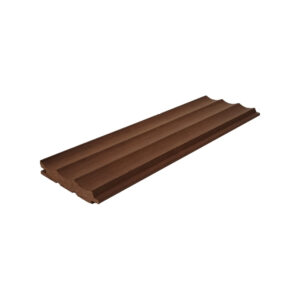
Because we control our own planing line, we can accommodate custom profiles and non-standard dimensions with a flexibility that larger, more rigid production operations cannot match. Architects working on bespoke sauna projects, and sauna manufacturers building proprietary bench systems, regularly work with us to develop profiles that are not part of our standard catalogue. This capability is part of what we mean when we describe ourselves as a partner rather than simply a supplier.
Meeting PieksaWood at Interbad: what to expect
For professionals planning to attend Interbad Stuttgart in 2026, a visit to our stand is an opportunity to engage with the full range of our sauna interior products and speak directly with our team. We will have bench board samples, panel profiles, and trim pieces available in aspen, black alder, and thermally modified versions of each, as well as thermally modified radiata pine. The samples are there to be handled, compared, and evaluated against the specific requirements of your projects.
Our team at Interbad includes people with direct knowledge of our production process, not just sales representatives. If you have technical questions about moisture content tolerances, profile tolerances, modification parameters, or sourcing documentation, those questions will be answered on the spot by people who work with the material daily. That is the kind of conversation that trade fair visits make possible and that is difficult to replicate through a catalogue or a website.
What to bring to the conversation
The most productive meetings at Interbad tend to happen when visitors arrive with a specific project or requirement in mind. If you are developing a hotel spa, planning a sauna manufacturing line, or specifying materials for a public wellness facility, bringing those project parameters to the conversation allows us to give you a direct, useful response rather than a general overview. We can discuss volumes, lead times, custom specifications, and logistics in concrete terms when there is a real project on the table.
Distributors and importers looking to add Finnish sauna wood to their portfolio are equally welcome. We work with distribution partners across Europe and understand the commercial requirements that make a supplier relationship viable at scale: consistent quality, reliable delivery, competitive pricing, and the ability to support end customers with technical information. These are conversations we are well prepared to have at Interbad Stuttgart.
If you are planning your visit to the exhibition and want to understand the full scope of what the event covers, the official Interbad website provides detailed information on exhibitors, programme highlights, and visitor registration. We look forward to meeting you in Stuttgart and showing you what over 75 years of Finnish wood craftsmanship looks like in practice.
Frequently Asked Questions
What is Interbad Stuttgart and why is it important for sauna professionals?
Interbad Stuttgart is a leading international trade fair for swimming, sauna, spa, and wellness, held every two years at Messe Stuttgart in Germany. It brings together manufacturers, architects, developers, and procurement professionals from across Europe and beyond. For sauna industry professionals, it is one of the most important events for discovering new materials, meeting suppliers, and staying current with design and construction trends.
What is the best wood for sauna interiors?
Finnish aspen and black alder are widely regarded as the best wood species for sauna interiors. Both are knot-free and resin-free, which prevents sticky surfaces under heat. They are dimensionally stable, comfortable against bare skin, and perform reliably under repeated cycles of high temperature and humidity. Thermally modified versions of these species offer even greater stability and moisture resistance for demanding commercial applications.
Why is Finnish aspen used for sauna benches?
Finnish aspen is the preferred choice for sauna bench boards because it contains no resin, which means it does not bleed sticky deposits onto surfaces when heated. Its grain is uniform and smooth, making it comfortable against bare skin even at high temperatures. It is also lightweight, which simplifies installation, and its light, clean appearance suits both traditional and contemporary sauna aesthetics.
What is thermally modified wood and how does it benefit sauna construction?
Thermal modification is a process that treats wood with high heat and steam, without chemical additives, to reduce its moisture absorption and improve dimensional stability. In sauna construction, this means the wood moves less with changes in humidity, reducing the risk of warping or cracking over time. Thermally modified wood also has improved resistance to biological degradation, which extends the service life of the installation, particularly in commercial spa and wellness environments.
What products does PieksaWood exhibit at trade fairs?
At trade fairs including Interbad Stuttgart, we exhibit our full range of sauna interior products: bench boards, wall and ceiling panels, and trim profiles in Finnish aspen, black alder, and thermally modified variants of both. We also carry thermally modified radiata pine for projects with different budget parameters. Custom profiles and non-standard dimensions are available and can be discussed directly with our team at the stand.
How does PieksaWood ensure consistent quality across its wood products?
We operate a fully integrated production chain in Pieksämäki, Finland, encompassing our own sawmill, thermal modification facility, and planing line. Every product is inspected by hand before packing. This vertical integration means we control quality at every stage rather than relying on third-party suppliers, and it allows us to respond quickly when buyers need custom specifications or have technical questions about the material.
Can architects and designers order custom sauna wood profiles from PieksaWood?
Yes. Because we operate our own planing line in Pieksämäki, we can produce custom profiles and non-standard dimensions with considerable flexibility. Architects, interior designers, and sauna manufacturers working on bespoke projects regularly collaborate with us to develop profiles that fall outside our standard catalogue. The best way to begin that conversation is to bring your project requirements directly to our team, either at Interbad Stuttgart or through our sales contacts and project enquiry form.