Sauna lights should be positioned low in the room, close to the floor or beneath the benches, rather than on the ceiling or high on the walls. This placement keeps harsh light out of bathers’ eyes, creates a calm and relaxing atmosphere, and avoids placing fixtures in the hottest zone of the sauna, where heat could damage them. The sections below cover everything from fixture types and placement rules to safety standards and dimming options.
What types of lighting work best in a sauna?
The best lighting for a sauna uses fixtures specifically rated for high-temperature, high-humidity environments. Sauna-rated LED lights are the most practical choice in 2026 because they run cool, consume little energy, and last far longer than traditional incandescent or halogen bulbs. Any fixture used inside a sauna must carry an IP54 rating or higher to withstand steam and moisture safely.
Beyond LEDs, fibre-optic sauna lighting is a popular option because the light source itself sits outside the sauna room, while only the fibre strands enter the hot space. This eliminates heat concerns around the bulb entirely. Traditional incandescent bulbs in purpose-built sauna fixtures still work and give a warm, amber glow, but they generate extra heat and burn out faster in the demanding sauna environment. Whatever fixture you choose, always confirm it is labelled for sauna use rather than simply for bathrooms or damp locations, as those ratings are not equivalent.
Where should lights be placed for the best sauna atmosphere?
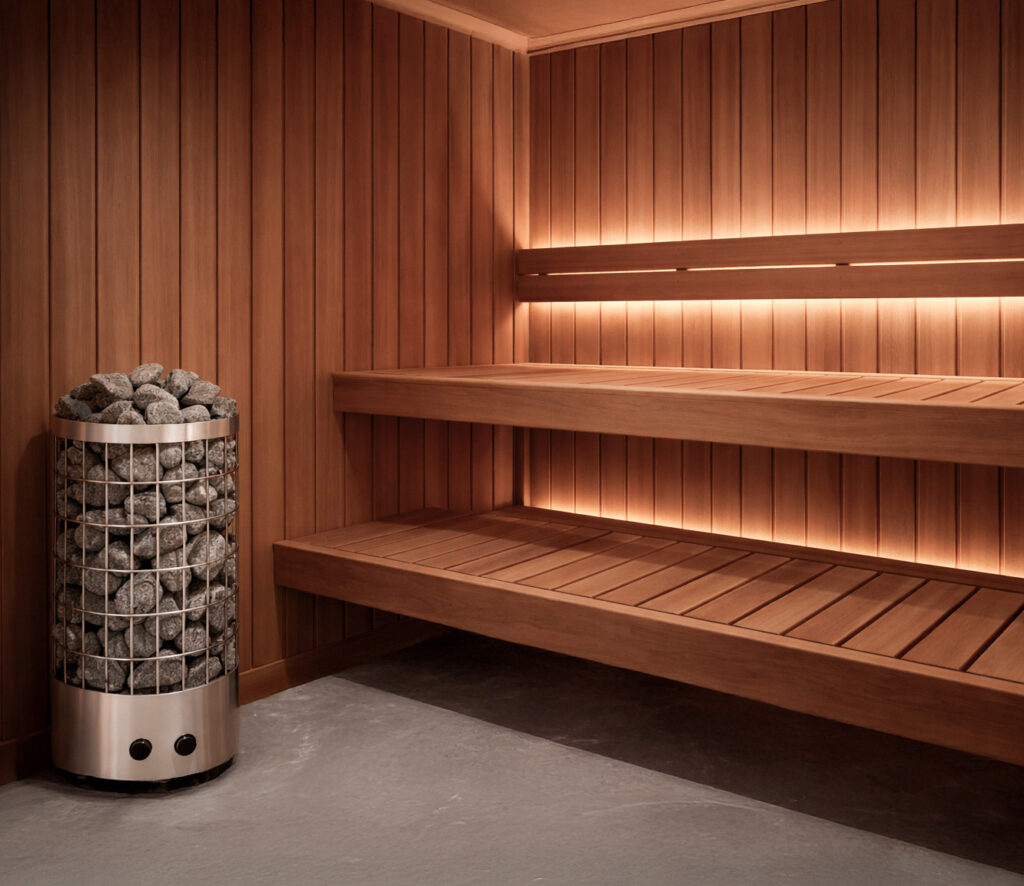
For the best sauna atmosphere, lights should be placed low on the walls, ideally at bench level or below, and directed downward or toward the floor. Low sauna light placement keeps the light source outside your direct line of sight when you are lying or sitting on the benches, which is what creates that characteristic soft, enveloping warmth rather than a harsh, clinical feel.
Positioning fixtures behind the backrest of the upper bench is one of the most effective sauna lighting ideas because the bench itself acts as a natural shield, casting a gentle glow downward without any glare. Lights placed along the floor perimeter or recessed into the base of the bench structure work equally well. Avoid ceiling-mounted fixtures wherever possible: they sit in the hottest part of the room, they shine directly into the eyes of anyone lying down, and they create a flat, functional light that strips the space of atmosphere.
Should sauna lights go above or below the benches?
Sauna lights should go below or behind the benches rather than above them. Placing sauna LED lights beneath the upper bench or along the lower bench structure keeps the light source hidden and produces an indirect, diffused glow that fills the room evenly. Lights positioned above the benches, including ceiling lights, shine directly onto bathers and create uncomfortable glare.
The practical reason is also thermal. In a sauna, temperature rises sharply with height. The area above the upper bench can reach extreme temperatures that stress even sauna-rated fixtures and reduce their lifespan significantly. Fixtures mounted at bench height or below experience more moderate temperatures, which extends their service life and reduces maintenance. If you want a subtle accent at a higher point, a small fixture recessed into the wall just above the door is one of the few exceptions that work without creating glare.
How many light sources does a sauna need?
A typical home sauna needs between two and four light sources to achieve even, comfortable illumination without bright spots or dark corners. The exact number depends on the size of the room, but the goal is layered sauna interior lighting rather than a single dominant fixture. One or two low-wall or under-bench lights provide the main ambient glow, while a secondary source near the door or opposite wall balances the room.
In smaller saunas of around four to six square metres, two well-placed fixtures are usually sufficient. Larger saunas, public facilities, or rooms with complex bench arrangements benefit from three or four sources to ensure every area feels equally warm and inviting. More fixtures at low intensity generally produce a better result than fewer fixtures at high intensity, since the aim is to avoid any single point of bright light drawing the eye.
What safety requirements apply to sauna lighting installations?
Sauna lighting installations must meet strict safety requirements because of the combination of high heat and moisture present in the room. All fixtures used inside a sauna must be rated IP54 as a minimum, and fixtures placed very close to the kiuas or in the upper reaches of the room should carry an IP65 rating. Wiring must be heat-resistant and routed through the walls rather than exposed inside the sauna.
Sauna zones follow the same zoning logic used in bathrooms, with the area immediately around the kiuas being the most demanding. Low-voltage systems, typically 12V or 24V, are strongly preferred inside the sauna because they reduce the risk of electric shock. The transformer or driver unit must always be installed outside the sauna room in a cooler, dry location. In Finland and across the EU, sauna electrical installations must comply with applicable electrical safety standards, and the work should always be carried out by a qualified electrician. Never adapt standard indoor lighting for sauna use, even if it appears physically similar to sauna-rated products.
Can you add colour or dimming to sauna lights?
Yes, you can add both colour and dimming to sauna lights, provided the components used are rated for the sauna environment. Dimming is particularly valuable because it allows you to adjust the mood from bright and invigorating to deeply relaxed within the same session. Sauna-rated LED drivers with dimming capability are widely available, and the dimmer switch or control unit should always be mounted outside the sauna room.
Colour-changing sauna LED lights, often using RGB or warm-white-to-amber transitions, have become a popular sauna lighting idea for both private and commercial installations. Chromotherapy, the use of coloured light to influence mood, is a common feature in spa environments and translates well to the sauna setting. Soft amber and red tones are the most popular choices because they complement the natural wood tones of the interior and feel restful on the eyes. When combining colour-changing LEDs with high-quality wood panelling and interior wood products, the interplay between light and grain can make even a compact sauna feel genuinely luxurious. We work with architects and interior designers who specify sauna materials and can advise on how different wood surfaces respond to various lighting temperatures, so feel free to contact us for expert sauna advice.