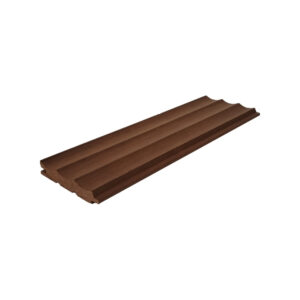
Choosing PEFC-certified wood for a sauna means choosing timber that has been independently verified as coming from sustainably managed forests, harvested under strict environmental, social, and economic standards. For sauna use specifically, certification adds a layer of confidence that the wood has been sourced responsibly and processed without practices that compromise long-term forest health. The sections below address the most common questions buyers ask when comparing certified and uncertified sauna wood.
What does PEFC certification actually guarantee about sauna wood?
PEFC certification guarantees that the wood in a sauna product has been traced back through the supply chain to forests managed according to internationally recognized sustainability standards. It does not certify the wood’s physical quality or its suitability for sauna use directly, but it confirms that the forest management, harvesting, and chain of custody meet defined environmental and social criteria.
In practical terms, PEFC (Programme for the Endorsement of Forest Certification) operates as an umbrella framework that endorses national certification schemes. When a sauna wood product carries the PEFC label, every link in the supply chain, from the forest operator to the sawmill to the manufacturer, has been audited by an independent third party. This means the claim of sustainable origin is not self-declared by the seller; it is externally verified.
What PEFC does not guarantee is the grade, dryness, or surface quality of the wood itself. A PEFC-certified plank can still vary in knot density, moisture content, or dimensional accuracy depending on the manufacturer’s own quality standards. Certification addresses origin and process, not finished product quality. For sauna applications, you still need to evaluate the species, treatment, and manufacturing precision separately.
Is PEFC-certified wood safer for sauna use than uncertified wood?
PEFC certification does not directly determine whether sauna wood is safe to heat, but it does reduce the risk that the wood has been treated with chemicals or harvested using practices that introduce harmful substances into the supply chain. Certified wood is more likely to have a transparent, documented history, which matters when the material will be exposed to high heat and steam.
The safety of sauna wood depends primarily on species, treatment, and finish rather than certification alone. Knot-free, resin-free species such as aspen and black alder are considered the safest choices for benches and wall panels because they do not release sticky resin or sharp splinters when heated. Heat-treated versions of these species add dimensional stability and resistance to moisture without the use of chemical preservatives, making them particularly well suited to the demanding sauna environment.
Where certification adds indirect safety value is in supply chain transparency. Uncertified wood carries a higher risk of unknown origin, which makes it harder to confirm whether chemical treatments, adhesives, or non-compliant processing have been used. For consumers and professionals who want confidence in what they are installing in a space where people breathe heated air, a certified supply chain is a meaningful assurance even if it is not a direct safety standard.
What’s the difference between PEFC and FSC certification for sauna wood?
PEFC and FSC (Forest Stewardship Council) are the two leading international forest certification systems, and both verify sustainable forest management through independent auditing. The key difference is structural: FSC is a single global standard, while PEFC is an umbrella body that endorses national and regional certification schemes, meaning the underlying standards can vary by country.
For sauna wood buyers in Finland and the Nordic region, this distinction is practically relevant. Much of the certified timber from Scandinavian and Finnish forests is certified under national schemes endorsed by PEFC, such as the Finnish PEFC system. FSC-certified Nordic timber exists but is less common in the sauna wood supply chain. Choosing between the two is therefore often a matter of availability rather than a significant difference in environmental rigor.
Both systems require chain-of-custody certification across the supply chain, both use third-party auditors, and both prohibit sourcing from illegal logging or areas of high conservation value. From a buyer’s perspective, either certification is a credible signal of responsible sourcing. If a specific project or client requires one system over the other, verify early in the sourcing process, as switching certifications mid-project can be complex.
Which sauna wood species are commonly available with PEFC certification?
The most commonly available PEFC-certified sauna wood species in Finland and Scandinavia are aspen, black alder, and pine. Aspen and black alder are the traditional benchmark materials for sauna benches and paneling because they are naturally resin-free, have a smooth surface that stays comfortable even at high temperatures, and hold up well under repeated cycles of heat and humidity.
Aspen in particular is widely available from Finnish certified forests, making it one of the most traceable and sustainably sourced options for sauna use. Black alder, valued for its warmth-enhancing color and fine grain, is also sourced from managed Finnish forests and can be supplied with full chain-of-custody documentation.
Heat-treated versions of these species, as well as heat-treated radiata pine, are increasingly available with certification. Heat treatment is a purely thermal process that requires no chemical additives, which aligns well with the environmental ethos that certification represents. We source our aspen from Finnish forests and process it entirely at our own facilities in Pieksämäki, which allows us to maintain full traceability from the raw log to the finished sauna bench or panel.
How can you verify that sauna wood is genuinely PEFC-certified?
The most reliable way to verify PEFC certification is to look for the PEFC label on the product or packaging and then cross-check the supplier’s certificate number in PEFC’s publicly accessible online database. Every certified operator in the supply chain holds a unique certificate that can be searched and confirmed independently, without relying on the seller’s word alone.
When buying sauna wood from a manufacturer or retailer, ask for the chain-of-custody certificate number rather than accepting a general claim of sustainability. A legitimate PEFC certificate will include the certificate holder’s name, the scope of the certification, and an expiry date. If a supplier cannot provide this documentation on request, the certification claim should be treated with caution.
For larger projects, such as commercial sauna installations or public facilities, it is worth requesting a delivery invoice or product declaration that explicitly states the certified percentage of the batch. PEFC allows mixed batches in some cases, and a product labelled as PEFC-certified may contain a defined minimum percentage of certified material rather than 100%. Understanding this distinction helps buyers make informed decisions, particularly when sustainability credentials are part of a project specification or a green building requirement. To discuss certified sourcing options for your project, contact us directly for project enquiries.